Your firm handles sensitive financial data every single day – tax returns, bank statements, payroll records, audit files. Whether your team works from a central office or across multiple locations, every device and connection creates potential exposure. One breach compromises the client trust you spent years building. One ransomware attack during tax season locks you out when clients need you most.
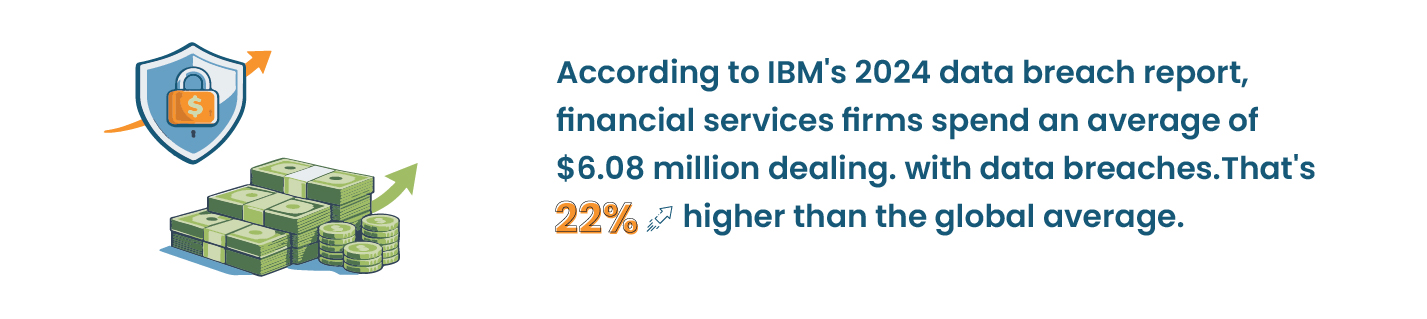
Source: IBM’s 2024 data breach report
The numbers are scary. This is why managed IT services for accounting firms are no longer a nice-to-have.
Most accounting firms and KPOs didn’t sign up to become IT experts. You wanted to serve clients and manage financials, not troubleshoot technology. But ignoring IT risks isn’t possible anymore.
Modern accounting practices face three critical challenges:
- Security threats targeting financial data keep increasing
- Proving compliance got harder with distributed teams
- System failures during crunch time = lost clients and missed deadlines
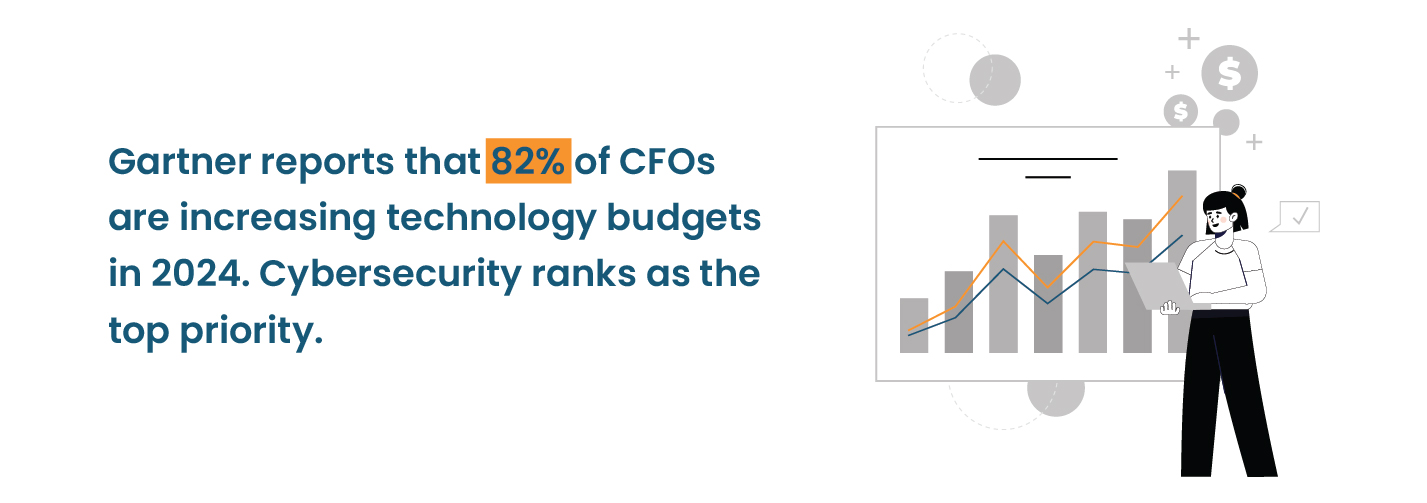
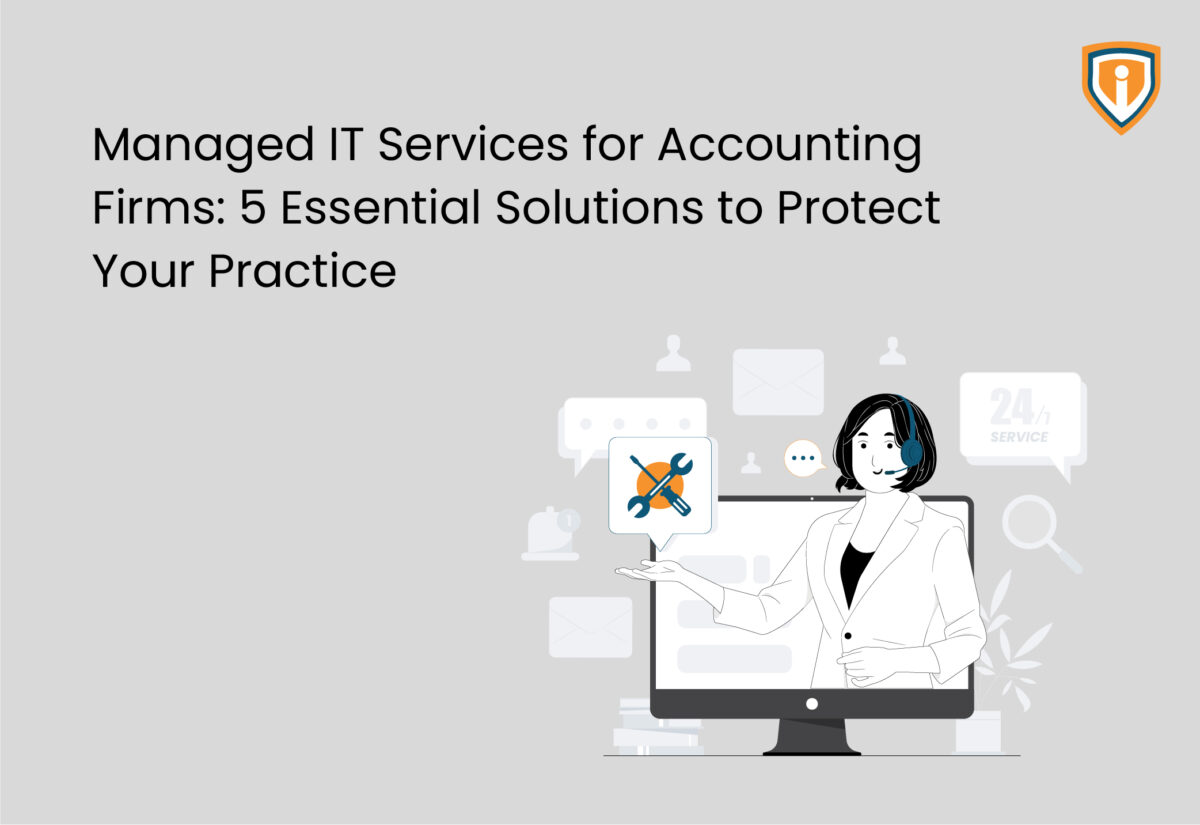
Five Essential Managed IT Services for Accounting Firms
Most accounting firms use managed IT services to protect sensitive financial data, maintain compliance, enable secure remote work, get centralized control over their business infrastructure, and avoid downtime during peak business hours.
Managed IT services for accounting firms addresses these challenges through five core services – cloud infrastructure, cybersecurity, compliance management, identity and access control, and business continuity planning. Now, these aren’t abstract IT concepts; they directly address the real IT risks accounting firms face every day.
Each service handles a specific risk area, but they’re designed to integrate seamlessly with your routine business operations so you get comprehensive protection without the complexity. Here’s why this actually matters for accounting firms:
1. Cloud Infrastructure and Remote Access
Why you need it: Your tax manager logs into the VPN, waits forever, and finds yesterday’s version because someone updated it on their laptop. Files scattered everywhere. Version chaos during busy season.
The problem:
- VPN slowdowns waste time when minutes matter
- Files on different computers = nobody knows which version is current
- Laptops crash, data disappears
- Can’t track who accessed what for audits
Someone downloads a file Monday morning, makes changes, saves locally. Another person downloads the same file Monday afternoon, makes different changes. By Tuesday? Nobody knows which version is right.
Cloud Infrastructure & Remote Access: How Managed IT Services for Accounting Firms Solve This
Everyone works on the same files in real time. Your Mumbai associate starts a return, your Manila manager reviews it, your partner finalizes it – same file, zero confusion. Automatic backups. Logged access for audits. Lost laptop? Nothing’s lost.
Solutions like Microsoft Azure paired with tools like SharePoint, enable this seamless access. Your QuickBooks Online, Xero, or Sage data syncs across devices while maintaining security protocols.
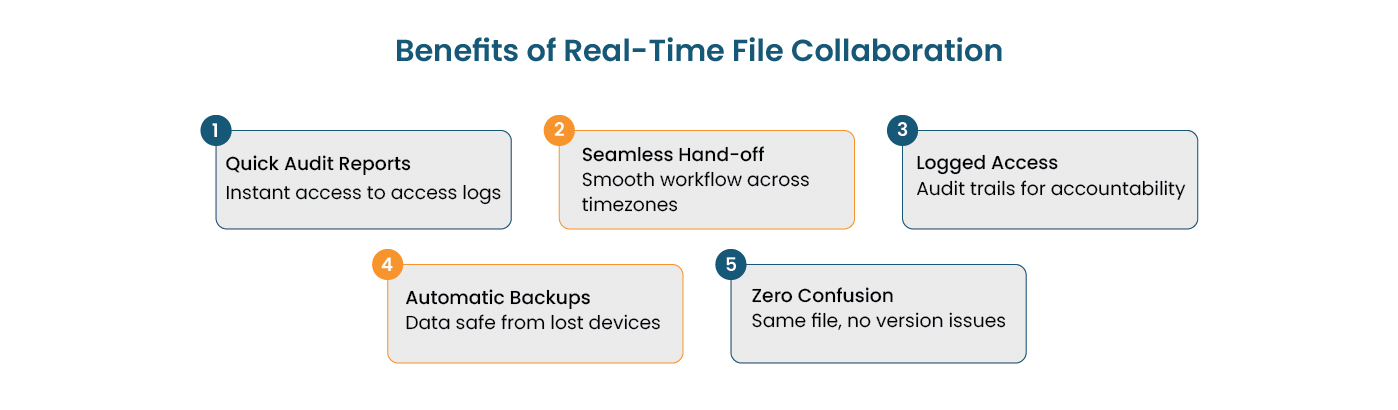
During tax season, your senior accountant in one timezone hands off work to your associate in another timezone. Seamless. No email attachments. No version confusion. No “which file is the latest?” questions.
Auditors ask who accessed what? Pull a report in seconds. Every login, every file access, timestamps for everything.
One CPA firm recovered 10 billable hours per week during busy season just by fixing their cloud setup. That’s billable time, not admin work.
2. Cybersecurity Protection
Why you need it: You have access to clients’ bank details, tax records, sensitive financial data. Criminals want exactly that.
The risks:
- Ransomware locks your systems during April deadlines
- Employees fall for phishing emails that look legitimate
- Breaches trigger regulatory fines and client notifications
- Client trust evaporates and business walks away after a breach
Financial services firms face constant cyber threats. Attacks are getting more sophisticated, and accounting firms make attractive targets because of the sensitive client data you handle.

Smaller firms face even greater risk. A single breach can destroy the reputation you built over decades and drive clients to competitors who seem more secure.
Cybersecurity Protection: How Managed IT Services for Accounting Firms Reduce Breach Risk
Email filtering blocks phishing before it hits inboxes. Threat detection spots weird login attempts and unauthorized file access. Security updates install automatically – nobody has to remember.
Tools like Microsoft Defender for Endpoint, Cisco Umbrella, or SentinelOne work behind the scenes. They integrate with your accounting platforms – QuickBooks, Xero, Sage – protecting data at every access point.
That’s proper IT support for CPA firms working.
3. Compliance Management
Why you need it: Auditor asks you to prove who accessed which client files over the past year. Can you? How long would it take?
SOC 2, GDPR, regional regulations keep growing. Clients ask more questions about data protection. Manual tracking wastes billable hours and you’ll miss something. Failed audits hurt reputation. GDPR fines go up to 4% of annual revenue for repeat violations.
Forbes reports compliance costs for large firms approx. $10,000 per employee. For mid-sized accounting firms, those costs add up quickly. Most of it comes from manual tracking and the chaos of preparing for audits at the last minute.
The real challenge: Role-based access controls are central to compliance frameworks like SOC 2 and GDPR. You need to prove that only authorized personnel can view sensitive client data, and that access permissions match job responsibilities. When clients span multiple countries, you’re also managing cross-border data transfer rules. Handling this manually across a distributed team becomes unmanageable fast.
Compliance Management: How Managed IT Services for Accounting Firms Simplify Compliance
Access controls keep junior staff out of partner files. Every file access gets logged – who, when, where, what they did. Geographic restrictions block access from unauthorized countries. Audit season? Generate reports in minutes, not weeks.
System enforces your policies. Microsoft Purview or similar compliance platforms automate this. They monitor access to your QuickBooks files, Xero ledgers, and Sage databases, creating audit trails automatically.
One firm cut compliance documentation from two weeks to under two hours. Passed audit with zero findings. Partners stopped dreading audit season.
4. Identity and Access Management
Why you need it: Former employees keep access for months. Junior staff accidentally open confidential files. Shared passwords make tracking impossible. Your team uses weak passwords across 15 different logins.
Around a third of data breaches involve compromised credentials – stolen passwords, phishing attacks, password reuse. Shared logins? Can’t track who did what.
Your firm uses QuickBooks, tax software, document management, email, three other applications. Each needs a login. Staff reuse passwords everywhere or save them in Word files and spreadsheet documents. Both are security nightmares
Identity & Access Management: How Managed IT Services for Accounting Firms Control User Access
Role-based access matches job roles. Using Microsoft Intune for device management and Azure AD for identity control, you can enforce policies across all devices. Whether accessing QuickBooks Desktop, Class Super, Xero, or Sage Intacct – access gets controlled centrally.
New hire gets associate-level access day one. Promotion? Access updates automatically. Someone leaves? One click removes all access everywhere.
Multi-factor authentication means stolen passwords don’t work. Single sign-on = one login for everything. Less password fatigue, better security. Team logs in once each morning, accesses everything without juggling passwords. Employment ends, and access ends simultaneously across every system.
5. Business Continuity and Data Protection
Why you need it: Tax deadlines don’t care if systems are down. Neither do audits, month-end closes, or client emergencies.
What’s at risk:
- Ransomware, disasters, power outages, hardware failures will happen
- During tax season, every hour down = missed deadlines and penalties
- Without backups, one hardware failure erases months of work and critical client data
Business Continuity & Data Protection: How Managed IT Services for Accounting Firms Prevent Downtime and Data Loss
Automated backups run throughout the day. Fast recovery in hours, not weeks. Cloud-based systems mean flooded office? Team works from anywhere.
Solutions like Veeam, Datto, or Azure Backup protect your critical data. Your QuickBooks company files, Xero data, Sage configurations – everything recovers quickly without data loss.
Real situation: Ransomware attacks don’t wait for convenient timing. When they hit during tax season, firms with proper backup systems can restore operations within hours instead of days or weeks. Recovery happens while criminals wait for payments that never come.
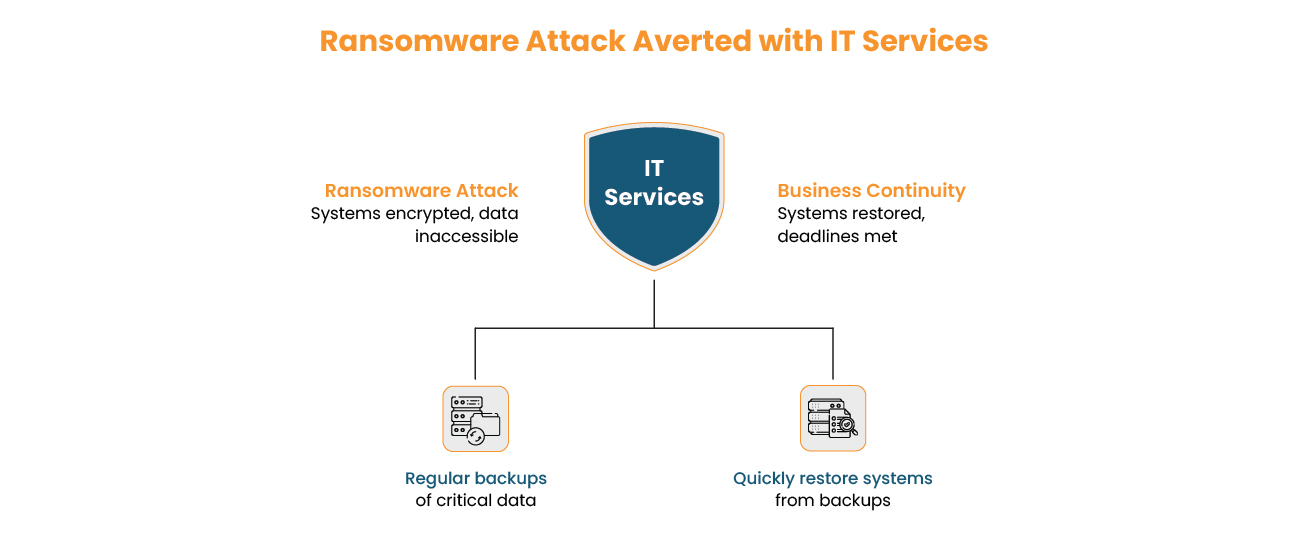
That’s what proper business continuity looks like. Disaster recovery minimizes downtime when problems hit. Regular backups protect against hardware failures and data loss. Redundant systems keep operations running if one component fails. Geographic backup locations guard against physical disasters. The cost of maintaining these protections is minimal compared to losing client data, missing deadlines, or paying ransom demands.
Compare that to firms without proper backups. They’re either paying ransoms (and might not get data back) or recreating months of work manually. Some never fully recover. Some close down.
What Makes Sense for Your Accounting Practice
These five services work together as an integrated ecosystem. Not about technology – about protecting your practice and serving clients better while maintaining a competitive edge.
Good IT support for accounting firms should be invisible like electrical wiring. It just works when needed.
What to look for in a Managed IT Service Provider:
Someone who gets tax seasons and compliance requirements, not just generic IT. Support at 10 PM during busy season, not just business hours. Explains things in laymen terms, not tech jargons. Scales from solo CPAs to multi-location practices with distributed teams.
Your next step:
Look honestly at your current setup. Where are gaps in these five areas?
- Cloud infrastructure and remote access
- Cybersecurity protection
- Compliance management
- Identity and access management
- Business continuity
Those gaps = your biggest risks right now. Also, best opportunities to protect clients’ trust and your firm’s reputation.
Finance and accounting firms across India and overseas-facing finance KPOs increasingly rely on managed IT services to support secure remote teams, protect client data, and meet global compliance requirements.
Investing in the right IT foundation is no longer about technology, it’s about running a practice that works in today’s hybrid business environment while staying secure and compliant. You competitors are making these investments. Can you afford not to?
Invest in the Right IT Foundation?
Start with a simple IT assessment to see where your current setup stands.