Outsourcing your NOC is no mean task. It affects uptime, response times, customer trust, and your team’s sanity. When it works, operations remain stable and running. When it doesn’t, systems start to fail, tickets pile up, alerts get missed, and clients and users start asking questions you don’t have answers to.
A lot of MSPs outsource either because they need coverage after hours, or because hiring and training a full NOC team is expensive and slow. Both reasons are valid. But outsourcing just to save cost usually backfires.
The real question is simpler: Can this partner run your NOC the way you would, even when you’re not watching?
Not every NOC provider is built for that level of responsibility. Some focus on volume, others rely too much on scripts, while many struggle with communication when things get tough. So, how do you pick the right provider?
This post will list seven criteria that actually matter when outsourcing NOC and the common mistakes made when zeroing in on one. But before that, let’s check out a few solid reasons why MSPs typically outsource it in the first place.
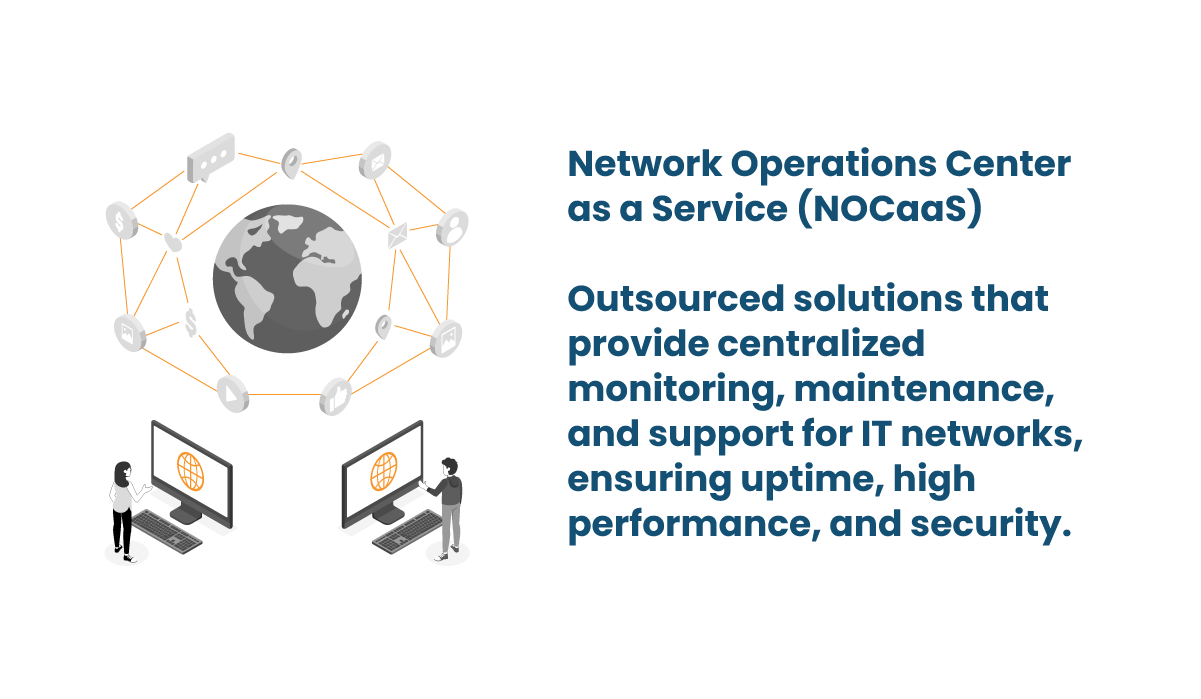
Why Smart MSPs Outsource Their NOC
Outsourcing NOC isn’t just about saving money. It’s about keeping things running, streamlining a very significant service offering, giving your team space to focus, and making sure alerts don’t turn into bigger problems. For most MSPs, it comes down to coverage, speed, and having the right team watching over systems.
24/7 Monitoring Without Burning Out Staff
Running your own NOC means rotating night shifts and asking engineers to cover long hours. In such cases, fatigue can set in, leading to mistakes and ignored warnings. An outsourced NOC service provider like Infrassist has people whose only job is monitoring and responding, so issues get handled in real time.
Responding to Alerts Faster
A dedicated NOC team follows clear procedures for every alert. CPU spikes, network slowdowns, or backup failures get investigated immediately. Problems don’t exist long enough to affect clients.
Predictable Costs and Fewer Pain Points
Hiring and managing an in-house NOC can be expensive. Salaries, training, tools, and coverage gaps; they all add up. Outsourcing, on the other hand, turns that into a consistent monthly expense and removes the stress of scaling up when clients grow.
Freeing Internal Engineers for Important Work
Your engineers are best used on tricky problems, projects, and escalations. Routine alerts tend to pull them away from high-value work. An outsourced NOC can handle the day-to-day monitoring so your team can stay productive.
Scaling Without Chaos
As your client base grows, the alert volume will grow too. More often than not, internal teams struggle to keep pace. Outsourced NOCs, however, can expand quickly without service gaps or added stress.
7 Must Have Criteria for Choosing a NOC Provider
Not all NOC providers are created equal. Some move fast but lack depth. Others follow runbooks without understanding the systems they manage. Picking the right partner comes down to capabilities that genuinely matter. Here are seven criteria that make a difference.
1 – Proven Technical Expertise
Your NOC provider should have engineers who understand the full range of technologies your business relies on. This includes cloud platforms, network devices, security tools, and server infrastructure. Certifications are a good baseline, but real-world problem-solving is what ultimately counts.
They should be able to troubleshoot issues efficiently, adapt to unusual situations, and provide guidance rather than just follow a script. Without deep technical know-how, minor incidents can escalate into downtime that affects clients.
2 – 24/7 Availability
Downtime tends to occur when you’re least expecting it, which means it can happen even beyond business hours. As such, failure can occur at any time, and a provider who only works during the day leaves gaps.
A competent outsourced NOC offers 24/7 coverage with specialists ready to respond immediately. This ensures that critical incidents, like server failures, network outages, or security alerts, get addressed as they happen, rather than hours later when internal teams start their shifts.
3 – Clear Escalation Processes
Simply reacting to alerts is not enough; your provider must know exactly how to handle each type of incident. A strong NOC has documented procedures for identifying, triaging, and escalating problems. They understand which issues can be resolved directly and which ones need your attention.
Clear escalation paths prevent miscommunication, reduce downtime, and ensure your team isn’t surprised by incidents that could have been contained early.
4 – Strong Communication and Reporting
A NOC isn’t doing its job if you’re frequently left in the dark. The right provider keeps you informed with regular reports, dashboards, and real-time updates. They communicate clearly about what happened, how the incident was resolved, and about any follow-up actions required.
Without this kind of transparent reporting, it is difficult to make informed decisions, track recurring issues, or demonstrate accountability to your clients.
5 – Proven Track Record
Industry experience matters for a reason. Ask for client references or case studies to understand how the provider has handled real incidents. Look for consistency in uptime, responsiveness, and problem resolution.
A provider with a proven history reduces risk because they’ve already managed scenarios similar to yours. Past performance is often the best predictor of future reliability.
6 – Security and Compliance
Your NOC will have access to sensitive systems and client data. For this reason, security cannot be an afterthought. The provider should follow strict protocols, encrypt sensitive information, and comply with relevant industry standards.
This will protect your business and your clients from potential breaches and ensures regulatory requirements are met. Security lapses at the NOC level can have serious consequences.
7 – Scalability and Flexibility
Your business isn’t static, and neither are your NOC needs. As you add clients or services to your portfolio, the volume of alerts and the complexity of systems will grow too. The provider should scale their staffing, coverage hours, and service scope to match your growth.
Flexible providers adapt quickly without causing service gaps or requiring long onboarding cycles. This means your business can expand without operational bottlenecks.

Common Mistakes MSPs Make When Outsourcing Their NOC
Most problems with outsourced NOCs don’t show up on day one itself. Things look fine at the start with alerts being acknowledged, tickets moving, and so on. The cracks appear later, usually during a busy week or a late-night incident. That’s when your decision starts to matter.
Picking the Cheapest Option and Calling It a Win
Budget pressure is real and every MSP feels it. But choosing a NOC mainly because the price looks good often leads to trade-offs you only notice later. Response times can stretch, while troubleshooting can be superficial. Engineers follow scripts because they have to move fast. It works until it doesn’t, and by then the cost shows up in other places.
Being Vague About What the NOC Actually Owns
A common assumption is that “monitoring” is self-explanatory. However, it isn’t. Does the NOC just acknowledge alerts, or are they expected to act? Do they restart services, apply fixes, or stop at investigation? When answers to these questions aren’t clear, issues are bound to remain unresolved and delay operations because both team members think the other side has it covered.
Escalation That Exists Only on Paper
Many escalation plans look good in documents but fall apart when real incidents take place. Contacts become outdated with unclear or misleading thresholds. The wrong NOC will hesitate at this point because they don’t want to overstep. As a result, precious time get wasted figuring out who should be involved. This can prove to be disastrous during an outage.
Assuming the NOC Will Figure It Out Without Context
Even a strong NOC struggles without proper context. Missing diagrams, outdated credentials, or half-finished runbooks slow everything down. Technicians and engineers end up guessing instead of acting. Over time, that creates hesitation, which is the last thing you want during an incident.
Granting Access Without Sufficient Precautions
This has less to do with mistrust and is more about security hygiene. Access tends to grow over time, making credentials and permissions more vulnerable. Without regular review, it can become unsystematic and unsafe. Clean access controls protect everyone, especially when multiple client environments are involved.
Struggling to Keep your NOC Stable?
Infrassist helps MSPs maintain coverage, clarity, and control across their NOC operations.
Conclusion
Outsourcing your NOC can work well, but only when it’s done with intention. The right provider doesn’t magically fix operational gaps. They make existing processes easier to manage and easier to scale. The wrong one just adds noise.
Most MSPs don’t struggle because they outsourced, but because expectations were ambiguous, ownership wasn’t clear, or the relationship stayed transactional. A NOC works best when it feels like an extension of the team, not a distant service that only shows up when alerts fire.
Before handing over monitoring, it helps to slow down and ask practical questions. How will incidents actually be handled at 2 AM, for example? What does escalation look like on a bad day? How often will both sides review what’s working and what isn’t?
When the answers are clear, outsourcing stops feeling risky. It becomes a robust way to protect uptime, reduce stress on internal teams, and keep clients steady without overbuilding internally.