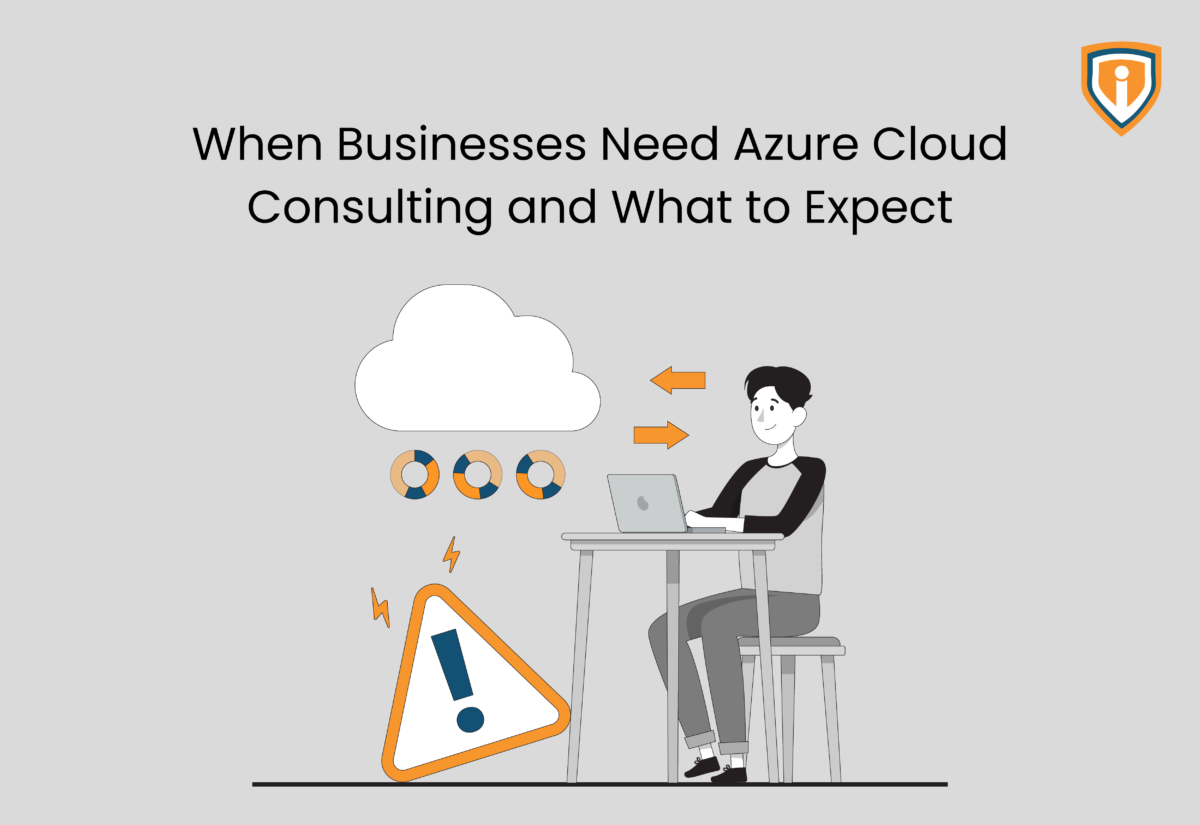
Moving your IT systems and devices to the cloud sounds easy when discussed in meetings. The process is described simply: you pick a provider, move your workloads, and call it progress. But once the real work starts, you realize that things can get complicated.
You find that legacy systems are more connected to your daily operations than you realized. You also understand that costs are not always predictable, and your internal teams already have too much on their plates.
Most businesses experience several tell-tale signs before reaching this point. Their servers start aging, maintenance bills keep climbing, and remote teams need reliable access that the current setup cannot support. Basically, what starts as an upgrade quickly turns into a bigger shift that changes the way the business runs.
This is where Azure cloud consulting matters.
It is not just about moving data from one place to another. Azure consulting services cover the full lifecycle, including assessment, architecture design, migration planning, deployment, governance, optimization, and ongoing monitoring.
Microsoft Azure consulting services bring structure and accountability to every stage. With the right partner, the process feels planned and controlled instead of rushed or reactive.
What Azure Cloud Consulting Really Means
Azure cloud consulting is broader than most teams expect and far more detailed than a simple migration checklist. Let’s learn about its implications.
It’s More Than Just “Moving Stuff” to the Cloud
Many businesses assume Azure cloud consulting is about lifting servers from a local setup and placing them in Microsoft’s data centers. This is correct, but it’s also just one piece of the puzzle. Moving workloads without reviewing how they are built, secured, and connected can give rise to new problems that are harder to fix later.
Dependable Azure consulting services begin with a close look at your current environment: which applications are business critical, how systems depend on each other, where security gaps exist, what regulatory requirements apply, and so on. These answers shape every technical decision that follows.
Microsoft Azure consulting services also address identity management, backup strategy, disaster recovery planning, and access controls. These elements protect operations long after migration is complete. The objective is not relocation alone, but also improvement, resilience, and better oversight.
Planning, Building, and Making It Work
Once the scope is clear, the focus shifts from understanding to execution. Azure cloud consulting follows a structured path that reduces risk and removes guesswork.
The process starts with assessment and architecture design based on business priorities. Migration planning defines timelines, technical dependencies, and fallback options, should something fail. Deployment takes place in different stages to avoid major disruptions.
But the job does not end when systems go live. Azure consulting services include governance policies to manage cost and security. Further, monitoring tools track performance and usage patterns, while optimization continues as workloads grow and change.
Microsoft Azure consulting services are built around sustainability. The goal is to leave you with an environment that supports daily operations without constant troubleshooting or reactive fixes.
Top Signs You Need Azure Cloud Consulting Support
Not every business needs external support from day one. But it’s important to pay attention to the clear signs that reveal it is time to consider Azure cloud consulting. Let’s find out what they are.
Your Systems Are Struggling
Performance issues are often the first red flag. Applications load slowly, servers hit capacity limits, and downtime becomes increasingly frequent. As such, your team spends more time fixing problems than planning improvements.
Microsoft Azure consulting services can help you assess whether the issue is hardware limitations, poor architecture, or misconfigured workloads. Further, they focus on building environments that are stable and scalable, instead of patching the same issues every quarter.
You’re Growing Faster Than Your IT Can Handle
Growth is good, but uncontrolled growth exposes weaknesses in infrastructure. New users, applications, and locations add pressure to systems that were never designed to scale.
If your IT team is constantly reacting to requests instead of planning ahead, it’s a warning sign. Azure cloud consulting helps redesign your environment to support expansion without constantly struggling. It creates a structure that supports growth instead of slowing it down.
Security or Compliance Is a Concern
Security concerns should never be an afterthought. If you are unsure whether your data is properly protected or whether your setup meets industry regulations, you need clarity fast.
Azure consulting services review identity management, access controls, backup policies, and disaster recovery planning. They also help align your environment with compliance requirements relevant to your industry. This helps minimize risk and builds confidence in how your data is handled.
Cloud Bills Keep Rising
Many organizations move to the cloud expecting cost savings. Then the invoices start climbing, thanks to unused resources running continuously and storage growing without oversight, with no one actively reviewing consumption.
Azure cloud consulting, however, includes cost analysis and optimization. They help identify waste, right-size workloads, and implement governance policies that control spending. Without this structure, overhead can increase month after month.
You’re an MSP Wanting to Offer Azure Services
Managed service providers face a different challenge. Clients expect Azure expertise, but building an in-house cloud team takes time and investment. Moreover, hiring certified professionals is not always realistic.
Microsoft Azure consulting services can support MSPs behind the scenes. They allow you to deliver Azure solutions without overextending your internal resources. As a result, you can expand service offerings while maintaining quality and consistency for your clients.
What Happens When You Work with an Azure Consultant
Bringing in a consultant is not about handing over control, but about adding clarity and structure to decisions that carry real risk. Azure cloud consulting follows a defined process that reduces surprises and improves outcomes.
Looking at Where You Are Now
Nothing useful happens without understanding the full picture. Hence, the first step in Azure cloud consulting is a detailed assessment of your current environment. This includes servers, virtual machines, databases, applications, network topology, security controls, and backup systems.
Consultants review workload performance, resource utilization, licensing models, and dependencies between systems. They identify legacy applications that may not be cloud-ready and flag potential compatibility issues early. Azure consulting services also examine compliance requirements, data residency rules, and business continuity expectations.
This stage often reveals inefficiencies that internal teams were too busy to notice. It forms the foundation for every technical decision that follows.
Planning the Move Without Disrupting Operations
Once the assessment is complete, the focus shifts to strategy. This is crucial because not every workload should be treated the same way. Some systems may be rehosted with minimal changes, whereas others might require reconfiguration or modernization to perform well in Azure.
Microsoft Azure consulting services define the migration approach for each workload. This includes selecting the right Azure services, estimating costs, planning timelines, and identifying fallback options. Risk analysis becomes critical here. Downtime tolerance, data sensitivity, and operational impact must all be factored into the plan.
Network design is also mapped carefully. Consultants determine how on-premises systems will connect to Azure using VPN or ExpressRoute. Identity integration with Azure Active Directory is planned to maintain secure access controls.
Building Your Cloud Setup
Next comes architecture design, where Azure cloud consulting moves from theory to structure. Consultants design resource groups, virtual networks, subnets, storage accounts, and compute environments aligned with your business model.
Security is built into the architecture from the start. Network security groups, role-based access control, multi-factor authentication, and encryption policies are configured as part of the foundation. Azure consulting services also implement governance frameworks using management groups and policies to control resource deployment and cost.
High availability and disaster recovery strategies are defined using availability zones, backup vaults, and replication services. The architecture is designed to handle growth without requiring constant redesign.
Moving Everything Safely
Migration is executed in phases whenever possible. Critical workloads are often migrated after lower-risk systems have been tested successfully. Data transfer methods are selected based on volume and sensitivity, whether through Azure Migrate, database migration services, or secure replication tools.
Microsoft Azure consulting services monitor performance throughout the migration process. Validation testing ensures applications function correctly in the new environment. Also, rollback plans remain in place in case unexpected issues appear.
Making Sure It Runs Smoothly Afterwards
Going live is not the final frontier. Post-deployment support is where many cloud projects either stabilize or start to drift. Azure cloud consulting includes ongoing monitoring, performance tuning, and cost management.
Consultants configure Azure Monitor, log analytics, and alerting systems to track system health. Resource usage is reviewed regularly to prevent waste. Additionally, security configurations are reassessed as workloads evolve.
Azure consulting services also support automation using tools like Azure Automation and infrastructure as code templates. This reduces manual errors and improves consistency across environments.
Microsoft Azure consulting services aim to leave you with an environment that is secure, optimized, and manageable. The outcome is not just a migrated workload. It is a cloud setup that supports daily operations, future growth, and long-term control.

Choosing the Right Azure Cloud Consulting Partner
Azure cloud consulting shapes how your environment performs long after migration is complete, making partner selection a technical and operational decision. This applies to end-businesses modernizing infrastructure and to MSPs delivering Azure solutions through platforms such as ICP (Intcomex Cloud Platform). Here are some of the factors you should consider.
Experience Across Real Azure Environments
A qualified partner should bring practical delivery experience across hybrid, multi-subscription, and multi-tenant Azure environments. This is because migrations involve legacy applications, identity federation challenges, network redesign, and cost restructuring.
The Azure consulting services you choose should demonstrate expertise in workload assessment, landing zone design, identity integration with Azure Active Directory, and governance implementation. They must also be experienced in automation, policy management, and cost optimization at scale. After all, proven execution reduces operational risk and shortens stabilization time.
Alignment with Your Operating Model
End-businesses may require end-to-end project ownership with structured milestones and post-deployment oversight. On the other hand, MSPs may need white label or collaborative support that integrates into existing service workflows.
When working through ecosystems such as ICP, Azure cloud consulting must align with partner provisioning models, subscription structures, and billing mechanisms. Technical design should account for delegated access, role-based control, and scalable multi-customer management. Flexibility in engagement ensures the consulting model supports how you already operate.
Post-Deployment Support That Extends Beyond Going Live
Once workloads are running in Azure, you start seeing actual performance patterns, real cost behavior, and practical security gaps that were not obvious during planning.
That is why Azure cloud consulting services need to include structured post-deployment support. This means setting up monitoring properly, reviewing performance trends, checking cost reports regularly, and refining policies as usage grows.
Microsoft Azure consulting services often continue in an advisory capacity after deployment. Azure updates roll out frequently, compliance requirements evolve, and business priorities shift. Having expert oversight during these changes helps teams respond with control instead of reacting under pressure.
Strong Governance and Knowledge Transfer
Azure consulting services should leave behind a controlled and documented environment. This includes defined resource hierarchies, policy enforcement, cost governance frameworks, and monitoring baselines. Microsoft Azure consulting services must also ensure internal teams understand operational responsibilities after going live.
In other words, the right Azure cloud consulting partner combines technical depth with structured communication. That balance ensures stability, scalability, and long-term manageability across both enterprise and MSP environments.
Common Azure Mistakes Businesses Make Without Consulting
While Azure does equip you with powerful tools, decision-making can go awry without timely guidance. Azure cloud consulting often becomes necessary after these issues start affecting cost, performance, or security.
Losing Track of Costs
One common mistake is assuming that moving to the cloud will automatically reduce business expenses. Teams end up deploying virtual machines, storage accounts, and databases without clear ownership or tagging standards. Moreover, test environments stay active long after projects end, while resources are oversized because actual usage data wasn’t reviewed.
To prevent this, Azure consulting services introduce cost governance from the very beginning. This includes resource tagging, budget alerts, rightsizing recommendations, and regular usage reviews. Microsoft Azure consulting services also help design subscription structures that provide visibility across departments or customers. Without such a framework, cloud spend can increase each month.
Weak Security Setup
When it comes to security, Azure is highly configurable, which means it can also be misconfigured. Default settings are rarely enough for production workloads. Access permissions may be broader than necessary, multi-factor authentication might not be enforced consistently, and logging and monitoring may not be enabled properly.
Azure cloud consulting focuses on identity architecture, role-based access control, network segmentation, and encryption standards. Azure consulting services also review backup and disaster recovery configurations to ensure resilience.
Treating Cloud as a One-Time Project
Many organizations treat migration as the final destination. Once workloads are live, their attention shifts elsewhere. Over time, performance drifts, costs rise, and governance weakens.
Microsoft Azure consulting services emphasize that cloud environments require ongoing oversight. Optimization, policy reviews, and architecture updates are continuous responsibilities. They promote a lifecycle mindset where improvement does not stop after deployment. Without this mindset, the benefits of the cloud can gradually erode.
Plan Your Azure Journey Right
Infrassist’s Azure cloud consulting services bring structure, control, and long-term stability to your cloud environment.
Conclusion
Azure cloud consulting is not just about moving workloads to a new platform. It involves understanding your current setup, planning carefully, designing the right architecture, and supporting the environment after go-live.
It also means controlling costs, strengthening security, and preparing for future growth. Whether you are an end-business modernizing infrastructure or an MSP expanding Azure capabilities through platforms like ICP, structured guidance makes a measurable difference.
If you are evaluating your next move, do explore Infrassist’s Azure cloud consulting services to see how a practical, experience-driven approach can support your cloud goals.