Growing an MSP isn’t always about finding new clients. Quite often, it’s about figuring out how to support the ones you already have.
A client signs a new contract and suddenly they need weekend coverage. Another expands to a second office. Someone asks for Azure expertise that nobody on the team really has. None of these requests are unusual anymore, it can get difficult to keep up without hiring every few months.
That’s one reason white-label IT support has become a practical option for many MSPs. It gives them room to take on more work without building a much larger internal team.
But there’s usually one question that comes up before any agreement gets signed.
“If another company is helping us deliver support, what does that mean for our client relationships?”
This is a reasonable concern. Clients don’t buy managed services because they want access to a particular technician. They buy them because they expect problems to be handled properly.
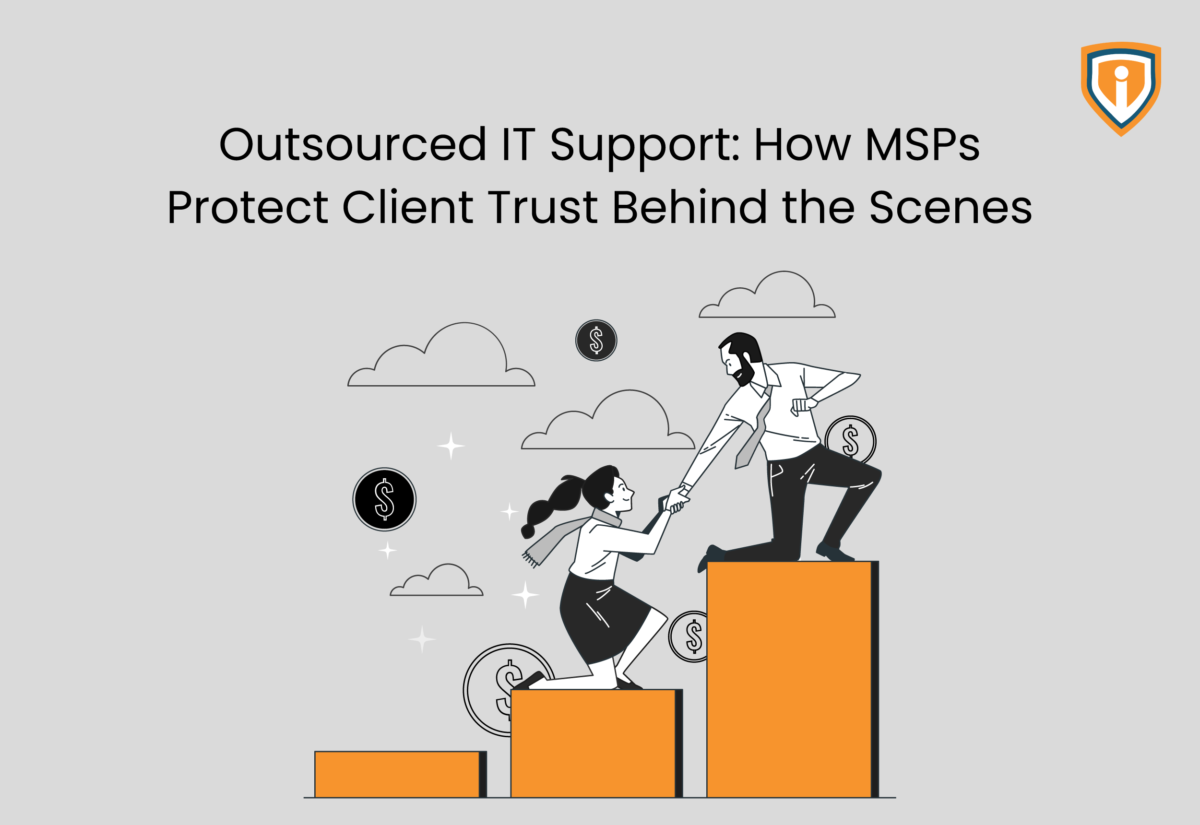
If this experience stays consistent, most clients never doubt the way work was distributed behind the scenes. Of course, this has to do with protecting and preserving client relationships. In this post, we’ll learn about how MSPs maintain client trust when leveraging white-label IT support partners.
Why MSPs Worry About Client Trust When Outsourcing Support
Ask any MSP owner why they’re cautious about outsourcing support to a white-label MSP, and the answer usually isn’t “we’re worried about technical skills.” It’s everything that comes after the technical work.
A technician can resolve the issue perfectly, but if the client waits hours for an update or has to explain the same problem to multiple people, the experience already feels different. This is the part clients remember.
Most concerns sound something like this:
- Will another team follow our processes?
- Will tickets be documented the way we expect?
- Will somebody take ownership from start to finish?
- Will clients notice a different way of communicating?
- If something goes wrong, how quickly will we know?
- Will the white-label IT support partner adhere to security best practices?
These questions aren’t really about outsourcing, but about consistency.
Think about a client who’s been with your MSP for five years. They’re used to how your service desk works. They know how tickets are handled. They know the updates they’ll receive and roughly how long issues usually take. This familiar routine creates confidence over time.
Now imagine the routine suddenly changes. Updates become shorter, resolution times become less predictable, and documentation starts looking different. Clients might never say, “You’ve outsourced your support.” They’ll simply feel that something is off. Once this happens, rebuilding confidence will be much harder than maintaining it.
What Actually Maintains Client Confidence
For clients, outcomes matter the most. They notice whether someone responds when promised, or whether the person handling today’s ticket understands what happened last month. And they definitely notice when they have to repeat information that’s already present in the ticket history.
That’s why mature MSPs spend so much time building repeatable service processes. The goal isn’t just efficiency, but consistency.
In practice, that usually means a few simple things.
- Tickets follow the same workflow, regardless of who picks them up.
- Documentation is detailed enough that another technician can continue the work without starting over.
- Escalations happen through an agreed process instead of whoever happens to be available.
- Clients receive regular updates instead of wondering whether anyone is still working on the issue.
- Access to client systems is managed carefully and recorded properly.
None of these is particularly exciting, and clients probably won’t mention it during a quarterly review. What they will notice is that support feels reliable. They’ll know what to expect because every interaction follows the same standard.
That’s also why a good white-label IT support partner makes the effort to blend into the MSP’s way of working. The processes and communication stay the same. From the client’s perspective, it’s still the same service desk they’re accustomed to.
What a Good White-Label MSP Partnership Looks Like Behind the Scenes
A white-label partner shouldn’t need a different way of working for every ticket that lands in the queue.
Think about what happens on a busy Monday morning. There are overnight tickets waiting for follow-up, users calling about new issues, project work in progress, and at least one client with something marked “urgent.” Nobody has time to figure out who owns what or whether the previous technician documented enough information before signing off. The process has to be clear long before the ticket reaches the queue.
That’s why experienced MSPs work tirelessly on refining operational standards. They understand that these standards remove guesswork when things get busy.
The same applies to a white-label IT support. If technicians need to be reminded how to document tickets, when to escalate an issue, or who should approve access to a client environment, something has already gone wrong. Operational maturity is something that should come with a white-label MSP engagement.
This is also why onboarding matters. A good partner doesn’t just learn the technology stack. They learn how the MSP runs its service desk, how technicians communicate with clients, how incidents are prioritised, and what the escalation process looks like. After all, these details have a direct impact on how clients experience support.
When both teams work the same way, clients receive the same service they’ve always received, which makes for a successful partnership.

How Infrassist Helps MSPs Scale Without Compromising Client Trust
Most MSPs don’t look for a white-label partner because they want to outsource everything. They usually reach that point after trying every other option first.
They’ve delayed hiring because recruitment is taking longer than expected. Existing technicians are covering evenings more often than they’d like. A new client has signed with requirements that don’t match the team’s current expertise. Or the business has grown to the point where every unexpected absence creates pressure somewhere else.
These are operational challenges, not business failures.
Infrassist works with MSPs facing such situations. Rather than replacing the internal team, it adds capacity where it’s needed. This could mean providing 24×7 help desk coverage, supporting infrastructure through NOC services, strengthening security operations with a dedicated team, or filling technical gaps with Azure specialists.
Technicians work within the MSP’s existing processes instead of creating parallel ones. Documentation stays in the same systems, tickets follow the same workflows, and escalations happen through agreed channels. Moreover, clients continue dealing with the MSP they know, while the additional team supports delivery in the background.
For the MSP, that means more flexibility and efficiency when workloads are evolving. For the client, it means the service remains familiar. Moral of the story: the white label IT support experience doesn’t need to change simply because the delivery model has.
Protect Client Trust While Scaling Your MSP
Expand your support capacity without changing the service experience your clients already trust.
Conclusion
Most clients never ask whether every person working in their environment is an employee of the MSP. They’re looking for something much simpler than that. They want support they can rely on. Naturally, this trust builds over time.
Tickets get resolved without delay, outages are handled professionally, and updates arrive before the client has to ask for them. These moments shape the relationship far more than the size of the team delivering the work.
White-label IT support doesn’t change this equation. If anything, the right partnership helps an MSP maintain the same service standards even as the business grows. And that’s really the goal. Clients should notice that their IT provider continues to deliver. They shouldn’t have to notice how it happens.