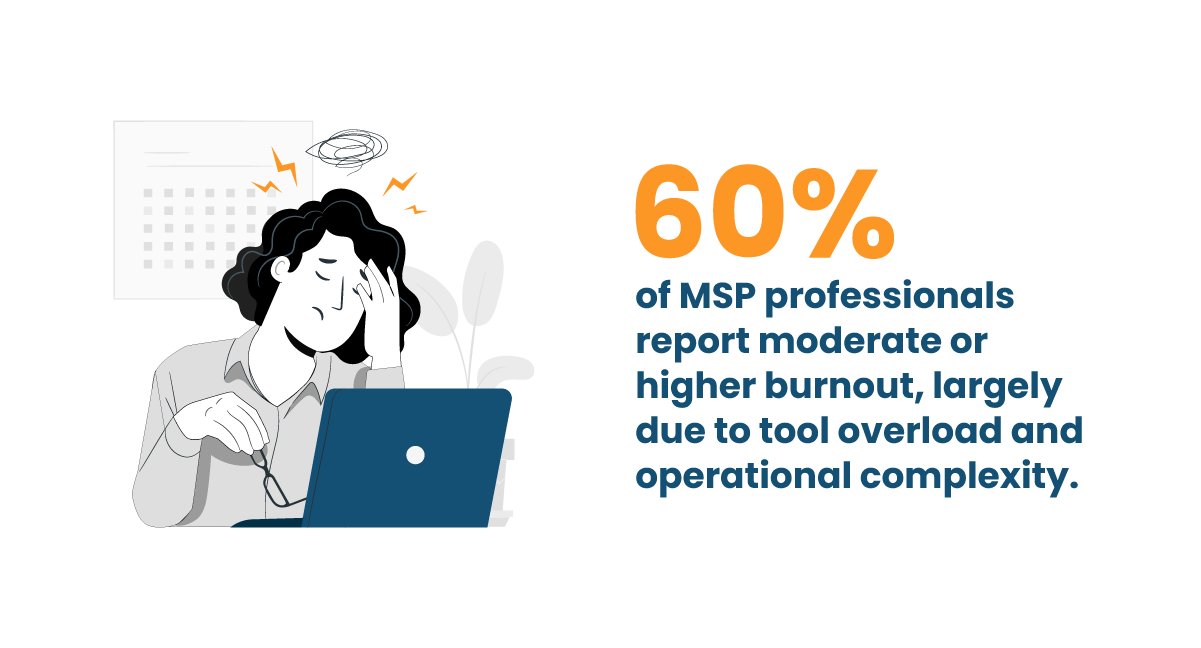
Running a NOC sounds pretty straightforward until you actually get down to doing it and realize that it can be perplexing and demanding. After all, breakdown alerts do not adhere to office hours. Clients, however, do expect prompt answers and updates. All of this can leave your team overworked and burnt out.
Of course, most MSPs start with the best intent. You build an in-house NOC to stay in control. But as pressure mounts over time, cracks begin to show in the form of understaffed night shifts, piled up alerts and tickets, and skipped processes. Something is bound to slip, and that’s when clients take notice.
It is at this point that many MSPs pause and reassess their strategy. Not because they failed, but because the model stopped scaling. You cannot grow if your NOC is always in survival mode.
White label NOC partners exist for this exact reason. They take on the operational load while you stay client-facing and in control. As such, you’re not giving up responsibility or control, but fixing what slows you down.
This post will shed light on the most common NOC challenges MSPs face and explain how white-label partners help solve them in practical ways.
Common NOC Challenges MSPs Face
Most MSPs do possess the right skills and intent. But they struggle when NOC operations start to destabilize once demand grows. What worked well with a few clients starts to crack when tickets spike, tools multiply, coverage hours stretch, and SLAs tighten. Triaging alerts and tickets becomes more complex, while root-cause analysis and ongoing maintenance start demanding far more time and structure as you scale.
Below are the challenges that show up most often and limit scale, service quality, and team morale.
Maintaining 24/7 Coverage Without Overwhelming Staff
On paper, 24/7 support sounds like a scheduling problem. In reality, however, it is a people problem.
Most MSPs rely on a small team rotating night and weekend shifts. Over time, fatigue sets in and response quality suffers. Moreover, talented engineers start looking for daytime-only roles. Consequently, hiring replacements and training them takes time and costs money.
The result is uneven coverage with day shifts running smoothly, nights feeling reactive, and weekends being held together with temporary fixes. Clients may not always complain, but they most certainly notice slower responses and repeated issues.
A NOC cannot be strong if the people running it are exhausted. And for many MSPs, scaling round-the-clock coverage internally becomes unsustainable faster than expected.
Alert Fatigue and Too Much Noise
In most cases, NOCs don’t lack data. In fact, they suffer because they have too much of it.
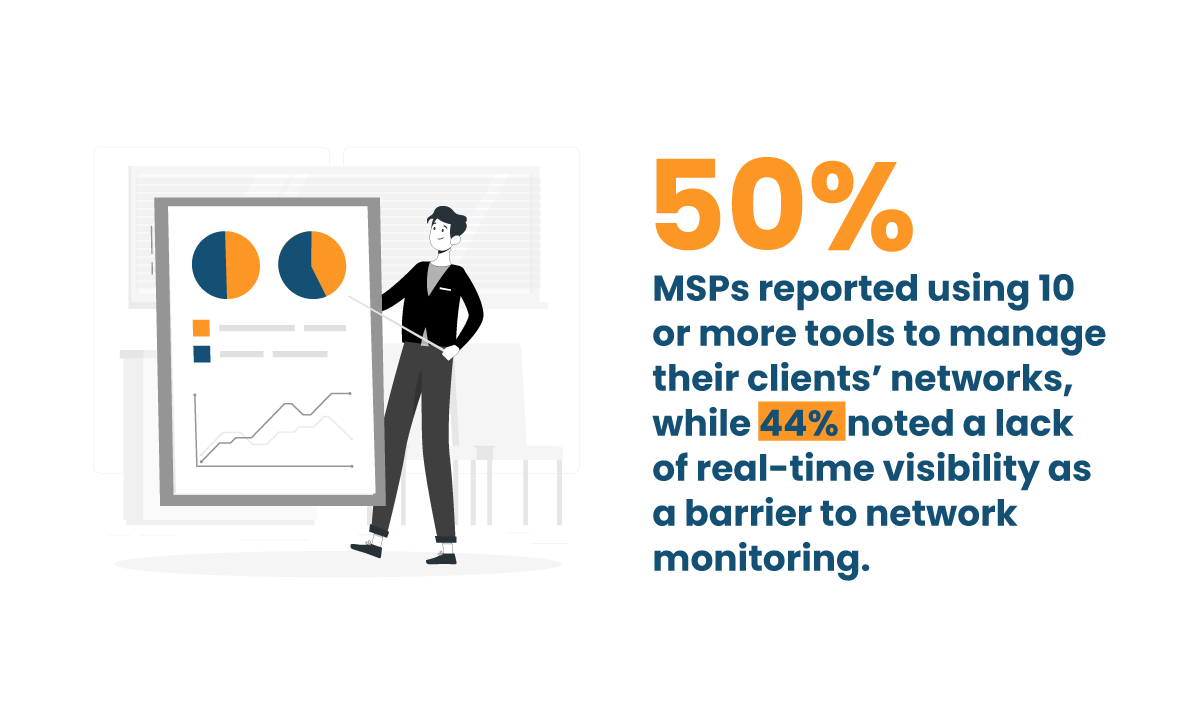
Monitoring tools generate thousands of alerts. Many of these are low priority, while others are false alarms. Some repeat the same issue across systems. As a result, engineers spend more time sorting alerts than solving problems.
Over time, teams start ignoring seemingly unimportant notifications. This is when critical alerts get missed and small issues turn into outages. Naturally, clients ask why no one acted sooner.
Alert fatigue is usually a process-related issue. Without proper triage, escalation rules, and consistent handling, even the best monitoring stack becomes a liability instead of a safeguard.
Inconsistent Processes Across Shifts and Staff
What happens when the same issue is handled three different ways by three different engineers?
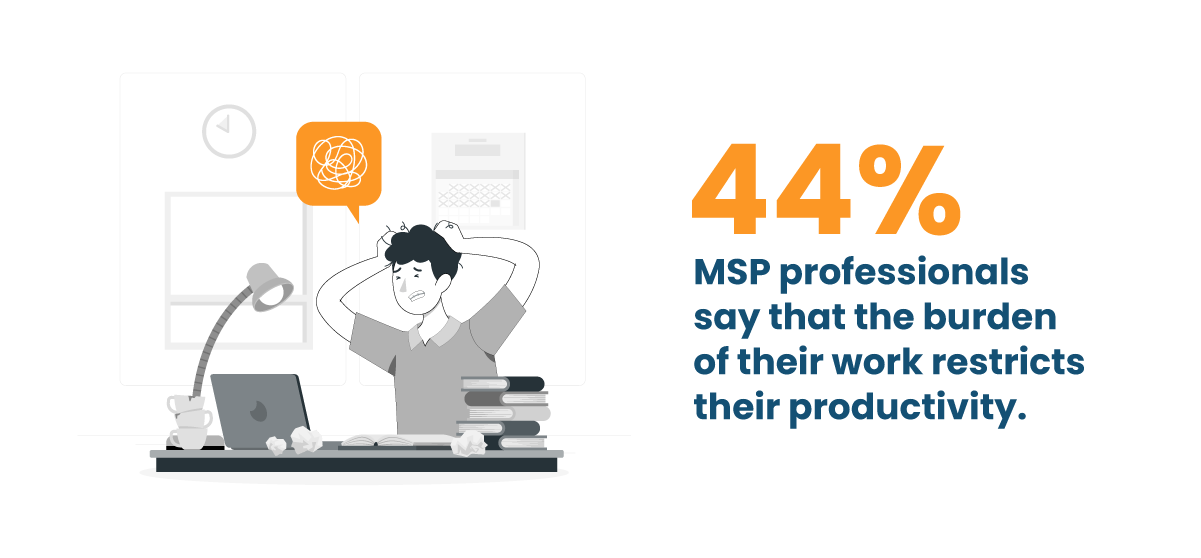
That is common in MSP NOCs. One person documents everything, another fixes the issue but skips notes, and the third one escalates too late or too early. None of this is intentional; it’s just what happens when processes aren’t being enforced.
The gaps usually show up during shift changes: context gets lost, tickets reopen, clients repeat themselves, and internal teams spend time figuring out what was already done instead of moving forward.
As MSPs grow, inconsistency becomes a serious risk. It affects response times, reporting, and client trust. Without standardized workflows and accountability, scaling a NOC only multiplies the chaos.
Rising NOC Costs with Little Cost Control
Running a NOC is expensive. Salaries, night shift premiums, tools, training, and turnover add up fast. Most MSPs know the cost is high, but they cannot clearly tie it to outcomes.
As the client base grows, costs rise too. But revenue does not always follow at the same pace. This puts pressure on margins and makes pricing harder. Some MSPs absorb the cost just to stay competitive, others pass it on to clients and risk pushback.
Without a predictable cost model, planning becomes guesswork. And when leadership cannot see where the money is going, the NOC turns into a cost center instead of a growth enabler.
Limited Scalability During Spikes and Emergencies
An important thing to remember about NOC is that NOC demand is not steady; it comes in waves.
Patch cycles, outages, security incidents, and onboarding new clients can overload even a well-run team. During these spikes, tickets pile up, response times slip, and IT teams cut corners just to keep things moving.
Here’s the tricky part: hiring ahead of demand is risky and expensive, whereas hiring after demand hits can be too late. Most MSPs end up stuck in the middle, always reacting instead of planning.
This lack of flexibility makes it hard to take on larger clients or new services with confidence. Growth starts to feel like a threat instead of an opportunity.
Gaps in Specialized Skills and Advanced Troubleshooting
It’s no secret that modern IT environments are complex. Cloud platforms, security tools, compliance needs, and hybrid setups all demand specific expertise.
Many MSP NOCs are strong at handling common issues but struggle with deeper problems. When advanced troubleshooting is needed, tickets get escalated repeatedly or sit idle while someone figures it out.
Clients feel this delay and so do internal teams. Technicians lose time context-switching or waiting for help. Over time, the MSP becomes known for slow resolutions rather than reliable support.
Skill gaps are not a failure, but a reality. The problem starts when the NOC has no backup to fill them.
Visibility Gaps and Weak Reporting
MSPs rely on data to prove value. But many NOCs lack clean, consistent reporting.
As a result, metrics can differ by shift, tickets may be left uncategorized, and root causes remain unclear. Even as the leadership sees the numbers, they might not gain insight from them. Clients can feel shortchanged if they get reports that feel generic or incomplete.
Without strong visibility, it is hard to improve operations or justify decisions. Why? Because trends get missed, repeat issues stay unresolved, and conversations with clients become reactive instead of strategic.
A NOC that cannot clearly show what is happening can make long-term improvement almost impossible.
Knowledge Loss and Fragile Continuity
In many NOCs, important client and system knowledge lives with a few experienced technicians rather than in shared documentation. These technicians remember past fixes, client-specific exceptions, and setup decisions that were never formally recorded.
When these staff are unavailable or leave the organization, gaps appear quickly across daily operations. Tickets take longer to resolve because newer team members lack context. Fixes become inconsistent, and teams spend time rediscovering information that already existed.
As an MSP grows, this risk increases instead of stabilizing. Each new client adds more history, more exceptions, and more reliance on individual memory. Without enforced documentation and standardized workflows, continuity becomes fragile and unpredictable.
A NOC built around individuals instead of systems struggles to stay consistent over time. This makes service quality harder to maintain and limits the MSP’s ability to scale with confidence.
How White Label NOC Partners Solve These Challenges
White label NOC partnerships work when they focus on operations. The goal is to remove pressure from internal teams while keeping service quality steady and predictable. Here’s how they help MSPs circumvent the obstacles in their way.
Stable Coverage Around the Clock
White label NOC teams operate in shifts designed for round-the-clock coverage as a default rather than an exception. This removes the need for internal engineers to rotate through nights and weekends.
Internal teams stay focused on client relationships and complex work during business hours. Coverage remains consistent at all times, and response quality does not drop after hours. Over time, this leads to better retention and a more sustainable operating model.
Smarter Alert Handling and Clear Escalation
White label NOC partners rely on defined triage rules and escalation paths that reduce noise before tickets reach technicians. Alerts are categorized, prioritized, and routed based on impact rather than volume.
This approach limits unnecessary interruptions and ensures critical issues receive attention quickly. Escalations follow clear thresholds, which prevents both over-escalation and delayed responses. The result is fewer missed issues and faster resolution times.
Standardized Processes Across Every Shift
Consistency is built through documented workflows that every engineer follows, regardless of shift or location. Tickets are handled the same way every time, with required updates, clear handoffs, and proper closure.
This removes guesswork during shift changes and reduces dependency on individual working styles. Clients experience predictable service, and internal teams gain confidence in what happens after hours.
Predictable Costs That Scale with Demand
White label models replace rising fixed costs with structured and more predictable pricing. MSPs can align operational spend with actual workload instead of hiring ahead of uncertain demand.
This makes budgeting easier and margins easier to protect. Growth doesn’t feel stressful as it no longer necessitates immediate staffing decisions, which reduces financial risk during expansion.
On-Demand Scale During Spikes and Incidents
White label NOC teams are built to handle volume changes without service disruption. Patch cycles, outages, and onboarding surges are absorbed without overloading internal staff.
This elasticity allows MSPs to take on larger clients and more complex environments with confidence. Growth becomes manageable instead of stressful.
Access to Specialized Skills When Needed
White label partners maintain teams with varied experience across platforms, tools, and environments. This provides access to advanced troubleshooting without hiring for niche skills internally.
When complex issues arise, they are resolved faster because the right expertise is already available. Internal teams avoid long escalation chains and unnecessary delays.
Clear Visibility, Reporting, and Accountability
Structured ticket handling and consistent categorization improve reporting accuracy. MSPs gain clearer insight into trends, repeat issues, and service performance.
This data supports better decisions and more meaningful client conversations. Reporting becomes useful instead of performative.
Built-In Knowledge Retention and Continuity
White label NOC operations rely on shared documentation and enforced knowledge capture. Client environments, fixes, and exceptions are recorded and updated as part of daily workflows.
This reduces risk when team members change or scale increases. Continuity is maintained through systems and processes, not individual memory.
When White Label NOC Support Makes Sense for MSPs
White label NOC support is not for every MSP at every stage. It becomes the right move when operational pressure starts affecting service quality, growth plans, or team stability.
This model makes sense when:
- After-hours tickets keep increasing and internal teams struggle to keep response times consistent
- Technicians rotate night or weekend shifts and burnout is becoming a real concern
- NOC costs rise faster than revenue, making margins harder to protect
- Ticket volume spikes during patching, outages, or new client onboarding
- Advanced issues take longer to resolve due to limited in-house expertise
- Service quality varies across shifts, creating inconsistent client experiences
- Leadership spends too much time managing operations instead of growing the business
- Knowledge depends heavily on specific engineers rather than shared documentation
When these signs appear together, the NOC stops being a support function and starts becoming a bottleneck. That is usually when MSPs re-evaluate how their operations are structured.
Wrapping Up
Running a NOC is not only about keeping systems online. It is about consistency, accountability, and the ability to scale without exhausting your team or hurting service quality. Many MSPs build internal NOCs with good intent, but over time, operational strain starts to show through missed alerts, rising costs, and uneven coverage.
White label NOC support offers a practical path forward when growth begins to stress existing models. It helps stabilize operations, protect internal teams, and bring structure where things have become reactive. When handled correctly, this approach supports long-term growth without forcing risky hiring decisions or constant troubleshooting.