Moving to Azure Cloud is one thing. Getting consistent value out of it is a different conversation. Infrastructure upkeep, cloud cost management, security governance, end-user support — the operational load is real, and most internal IT teams are already stretched. That is where a good Azure managed service provider comes in.
After cross-referencing across multiple MSP and cloud advisory sources, we have put together a list of the best Azure managed service companies in 2026. The focus is on what each company actually delivers on Azure.
What Are Azure Managed Services?
Azure managed services means a third party runs your Microsoft Azure environment on your behalf. Some providers stick to monitoring and patching. Others handle the full stack — architecture, migration, 24/7 helpdesk, and compliance reporting to name a few.
For IT leaders, the decision usually breaks down like this: you get specialized Azure expertise without hiring for it permanently, you get SLA-backed reliability instead of hoping your internal team can keep up, and your people can focus on projects that matter.
The scope varies here. You might be running IaaS and PaaS workloads, Azure Virtual Desktop, hybrid cloud infrastructure, or dealing with vertical-specific compliance requirements.
Top 10 Azure Managed Service Providers in 2026
1. Infrassist Technologies
Best for: MSPs that want to offer Azure services to clients or businesses that want specialized Azure managed services without building an in-house Azure team
For managed service providers, Infrassist supports as a white-label partner — delivering everything under your brand so your clients see you, not them. For businesses running their own IT, they provide Azure expertise on-demand without the overhead of permanent hires.
What they cover on Azure:
- Azure Migration Services — server, web application, database, and application workloads
- Azure Infrastructure Solution Design and Deployment
- Azure Virtual Desktop (AVD) Migration and Deployment
- Cloud environment audits and health assessments
- Automation via PowerShell scripting and API integrations
- 24×7 NOC, dedicated helpdesk, and POD team models
Delivery is aligned to Microsoft best practices and the Azure Cloud Adoption Framework throughout. They are ISO 27001:2013 certified and have 150+ MSP partnerships across 15+ countries. For MSPs growing their Azure portfolio without taking on headcount, this is the model built for it.
2. Entrans
Best for: Businesses that want cloud operations and AI-driven automation handled together, not separately
Entrans takes an AI-first approach to cloud delivery. Automation is not bolted on after the managed service is set up because it is built in from day one. Cloud migrations, infrastructure management, and ongoing operations all sit under one engagement.
Key areas they cover:
- Azure cloud migration — server, database, and on-premises workloads
- Hybrid and multi-cloud management with integrated data flows across platforms
- Agentic AI framework integration into cloud operations
- Infrastructure design, deployment, and performance monitoring
Zero-downtime delivery is a stated commitment — relevant for businesses that cannot absorb disruption mid-migration.
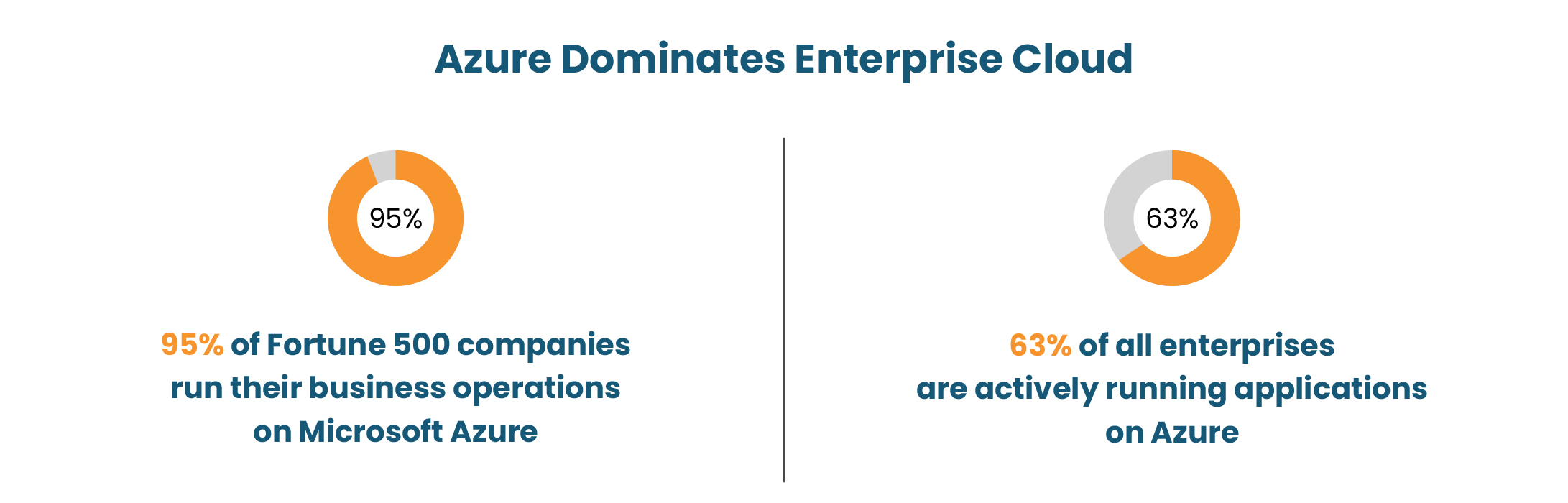
Source: Microsoft
3. Navisite
Best for: SAP on Azure and complex multi-platform database environments
Navisite covers the standard Azure MSP stack — migration, modernization, managed operations, cost optimization, FinOps — but SAP on Azure and fully managed DBaaS are where they stand apart. Not every provider on a list like this can say that with a straight face.
What they deliver:
- Cloud migration and workload modernization
- 24/7 proactive monitoring across IaaS and PaaS
- SAP on Azure — implementation, migration, and managed operations
- Fully managed Database-as-a-Service (DBaaS) across complex environments
- Azure cost optimization and FinOps governance
Worth shortlisting where the Azure footprint includes a significant SAP landscape or multiple database platforms.
4. Avanade
Best for: Large organizations running Azure inside a Microsoft-heavy tech stack
Avanade started as a Microsoft-Accenture partnership back in 2000. Still Microsoft-only. Matters most when you are running Azure with Dynamics 365, M365, and Power Platform — the whole stack needs to integrate cleanly, not just coexist.
What they handle on Azure:
- Strategy, migration, and managed infrastructure
- App modernization and cloud-native builds
- Tying together Azure, Dynamics 365, Microsoft 365, and Power Platform
- Digital innovation and AI work inside the Microsoft ecosystem
Enterprise pricing. Best suited to large shops where cloud is one piece of a bigger Microsoft play.
5. NTT Data
Best for: Mid-to-large enterprises wanting SRE-driven Azure operations that improve over time
NTT Data holds both the Microsoft GSI and Azure Expert MSP designations. The Azure Management and Innovation practice runs on Site Reliability Engineering principles — continuous improvement, not just keeping lights on.
Core delivery areas:
- Azure infrastructure management — patching, backup, disaster recovery, governance
- Database performance monitoring and fault resolution
- CI/CD pipeline management and DevOps integration
- SRE-driven incident management and operational governance

Source: Statista
6. Pythian
Best for: Data-heavy Azure workloads and multi-cloud FinOps management
Database management is where Pythian started, and that depth carries into how they handle Azure. Cloud advisory, architecture, and migration are all on the table, but the real specialist position is in database performance and data operations. They also manage FinOps across Azure, Google Cloud, and AWS — relevant where the environment is not Azure-only.
What they offer:
- Cloud architecture, cost governance, and Azure migration advisory
- Database migration, performance tuning, and ongoing managed operations
- Multi-cloud FinOps across Azure, GCP, and AWS
- Data engineering and advanced analytics on Azure
7. Cloud4C
Best for: Mission-critical or regulated environments needing AIOps and managed security from one provider
Cloud4C is an Azure Expert MSP that runs managed services on a proprietary Self-Healing Operations Platform (SHOP) — automation that detects and fixes infrastructure issues before manual intervention is even needed. They operate across 29 countries, back delivery with a 99.95% uptime SLA, and work on a pay-per-use model right down to the application layer.
Azure service coverage:
- Round-the-clock monitoring — infrastructure, networks, workloads, databases, apps
- Managed Detection and Response plus dedicated SOCs
- Azure Sentinel hookups and Privileged Access Management
- 40+ security controls, automated compliance handling for PCI-DSS, GDPR, HIPAA
- AIOps-driven incident resolution via SHOP
8. SNP Technologies
Best for: Companies that want a dedicated Azure-only partner with FinOps, DevOps, and data analytics depth
SNP is a Microsoft-only cloud partner. Azure is the entire business, not a practice area inside a larger IT services firm. That focus shows up in the account model too — each client gets a named Technical Account Manager and regular scheduled reviews built in as standard.
Service areas:
- Compute infrastructure — both IaaS setups and workloads running on Windows or Linux, plus networking, backup, and governance
- DevOps work — CI/CD pipelines, AKS clusters, Application Insights
- Data analytics using Azure Data Factory, Databricks, Synapse, and Azure Data Fabric
- FinOps — cost optimization through the Azure Savings Program, architecture reviews, and ongoing usage tracking
Two-module Cloud Management Platform handles governance, financial oversight, and SLT adherence.
9. Insight
Best for: Mid-market to enterprise organizations wanting proven Azure consultancy at scale
Insight is a Fortune 500 company and holds Microsoft’s Azure Expert MSP designation. The differentiator here is scale and delivery consistency — they have served clients from mid-market through to large enterprise long enough to have the process standardized across both.
Azure consultancy covers:
- Windows Server and SQL Server migration to Azure
- Data warehouse migration and modernization
- Microsoft Teamwork and collaboration workload deployment
- Broader Azure infrastructure advisory and managed operations
Microsoft partnership depth gives early access to Azure roadmap updates and preview features.
10. Itransition
Best for: Organizations that need one partner to both run Azure and build on it
Itransition is a Microsoft Solutions Partner. The managed services side covers Azure consulting, migration, cloud enablement, and ongoing operations — nothing unusual there. The difference is that custom application development runs at the same depth, from the same shop. No splitting responsibilities across two vendors and managing the gap between them.
What they build and manage on Azure:
- SaaS engineering and serverless architecture
- Custom microservices, web, and mobile application development
- AI/ML integration and IoT enablement on Azure
- Data analytics and Azure-native reporting
- End-to-end managed cloud operations
Clutch-recognized, with enterprise clients including Xerox and Barr Credit Services.
Ready to Scale Your Azure Practice?
Infrassist delivers white-label Azure services — migrations, infrastructure management, AVD deployments, and 24×7 support — all under your brand.
How to Choose the Right Azure MSP for Your Business
No single provider fits every situation. Start by be-ng clear on the actual requirement.
White-label Azure delivery or want to architect Azure solution tailored to your environment from ground up? Infrassist is the only one on this list built for that. Single partner for cloud ops and application development? Itransition or Entrans. SAP-heavy environment? Navisite first.
Database-intensive workloads with cross-cloud FinOps? Pythian. Mission-critical ops with managed security in the same engagement? Cloud4C. Deep Microsoft stack integration across Dynamics and M365? Avanade. Dedicated Azure-only focus with FinOps and DevOps depth? SNP.
One thing worth verifying with any provider: how escalation works outside business hours, specifically. The answer tells you more about operational maturity than a certification list does.
The right MSP runs quietly in the background — environments improve, issues get resolved before you hear about them, and the team is freed up to focus elsewhere. That is the outcome worth measuring against.