Ask ten MSPs what their NOC engineers do on a given shift and the answers won’t line up. Client mix is different at each one. Tooling is different. How much of the alert queue AI is already clearing before a human sees it varies wildly too. Yet the core of NOC engineer skills and responsibilities barely changes from one shop to the next: catching problems in the RMM and ITSM stack, in cloud monitoring, in whatever scripted remediation is running quietly in the background, fast enough that the client never notices.
Team leads building a NOC bench today are hiring for a role that doesn’t look much like the one from a few years back. The tiers changed. The required skill list got wider.
The automation layer underneath both of those moved at roughly the same pace, and that’s exactly the problem with updating any one piece in isolation, the job posting ends up describing someone who stopped existing a while ago.
What Is a NOC Engineer?
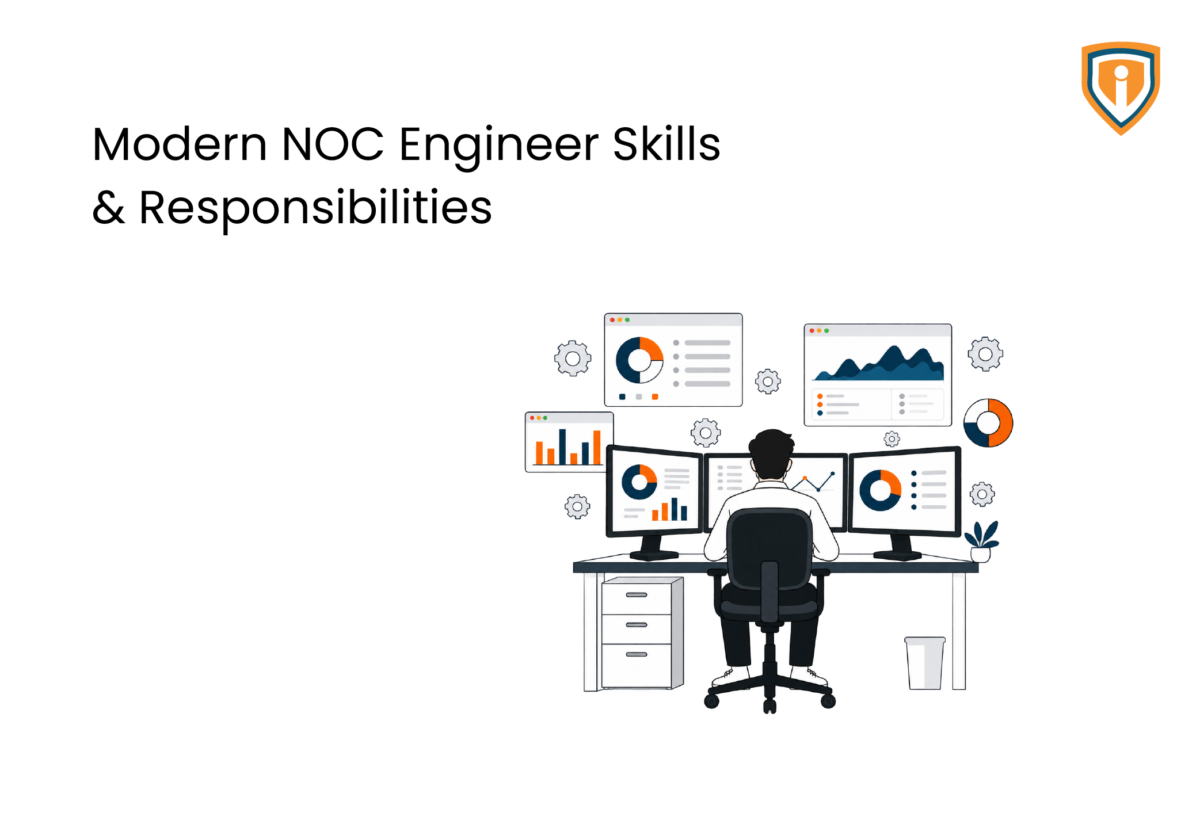
A NOC engineer keeps watch over, troubleshoots, and keeps running the servers, networks, and infrastructure an MSP is responsible for.
Simple enough to describe, harder to do well: catch the problem before the client feels it. Something looks off, the monitoring stack throws a flag, and from there the engineer either fixes it on the spot or hands it to whoever can, before it becomes an actual outage.
Shift structure, escalation tiers, and how an alert actually travels through a network operations center get covered in more depth over in what a NOC does. What follows here sticks to something narrower, the engineer’s own skills and responsibilities, tier by tier.
Network Administrator vs. NOC Engineer: What’s the Difference?
People use the titles like they’re interchangeable, but they’re not really the same job.
A network admin’s work mostly happens before anything is even live. Picking out routers and switches, mapping VLANs, deciding how OSPF or BGP should route traffic across the setup. They do show back up later, but usually only when something structural shifts, a new office, a move to the cloud, that kind of thing.
NOC engineers deal with what’s already running. Alerts, tickets, a port that just dropped for no clear reason, latency creeping up on one segment while everything else looks fine. They didn’t decide how the network was built, and that’s not their job to begin with. Their job is catching what’s about to break before a client calls asking why their site’s down.
So one group builds the thing, but the other one watches it, and there isn’t a ton of overlap between the two day to day.
NOC Engineer Roles and Responsibilities
Day-to-day work looks different depending on the tier, but there’s a set of responsibilities that lands on basically every NOC engineer:
- Alert monitoring and triage: This means keeping an eye on the monitoring stack, RMM, SIEM, and cloud dashboards at the same time, and pulling the real incident out of the noise before it eats into a client’s SLA clock.
- Incident response and troubleshooting: A structured runbook gets used here to actually isolate root cause, rather than just clearing the alert and moving to the next one.
- Escalation management: Recognizing when a ticket genuinely needs Tier 2 or Tier 3 expertise, and handing it off with enough context attached that the next engineer doesn’t start from scratch.
- Documentation and reporting: Logging what happened and what fixed it so the knowledge base gets faster over time instead of sitting there collecting dust.
- Client and vendor communication: Translating a technical incident into plain language for whoever’s on the other end, and coordinating with third-party vendors when the fix falls outside what the MSP directly controls.
All of that eventually turns into a number one way or another. SLA tracking is basically NOC performance measurement in miniature, and the formulas behind metrics like MTTR and SLA compliance rate live over in NOC KPI benchmarks.
L1 vs. L2 vs. L3 NOC Engineer Responsibilities
No two NOC engineers on the same team are doing quite the same job, even with the same title on the door. The tier system exists because alert triage work and root-cause architecture work draw on genuinely different depths of skill:
- L1 NOC Engineer handles the front line, first-pass alert triage, basic runbook troubleshooting, ticket logging, and routine fixes such as a service restart. Anything with real root cause behind it moves up from here.
- L2 NOC Engineer is where things get deeper. Whatever L1 escalates lands here, root cause analysis, configuration changes across servers and network devices, and often the scripting work that turns a one-off manual fix into something that doesn’t need a human the next time. Point at where most of the real technical troubleshooting on a NOC team actually happens, and it’s this tier.
- L3 NOC Engineer is the specialist tier where engineers take on the heaviest operational hits. These are the folks handling multi-system failures, direct vendor escalations, and high-stakes calls requiring architecture-level judgment. Crucially, they are almost always the same engineers who wrote the runbooks L1 and L2 rely on day to day.
| NOC Tier | Core Focus | Typical Tools | Escalates To |
| L1 | First alert triage, routine fixes, ticket logging | RMM console, ITSM/ticketing | L2 for root-cause work |
| L2 | Root cause analysis, config changes, scripted remediation | ITSM, monitoring/SIEM, scripting tools | L3 for complex or vendor issues |
| L3 | Complex incidents, architecture input, vendor escalation | Full stack access, cloud consoles, automation platforms | Architecture team or vendor directly |
NOC Engineer Technical Skills for 2026
Job titles haven’t caught up with how fast the toolset has changed. Being genuinely good at this job now means covering a lot more ground than it used to ask for:
- Monitoring and RMM. Living inside an RMM platform most of the day, reading dashboards across a dozen different clients, tuning alert thresholds down until notifications mean something again instead of just piling up.
- ITSM and ticketing. Fluency in whatever ITSM system the MSP has standardized on, since documentation quality is a big part of how fast the next engineer can pick a ticket back up.
- Cloud monitoring, because a lot of what’s being watched these days sits in Azure, AWS, or M365 instead of a rack down the hall, and pretending that’s optional stopped being realistic a while ago.
- Doesn’t need to be advanced, even rough PowerShell or Python is enough to turn a repetitive manual fix into something that just runs itself the next time the same alert shows up.
- Networking fundamentals, TCP/IP, DNS, routing, switching, still sit underneath everything else on this list whether it gets talked about or not.
- Troubleshooting methodology. A structured approach to isolating root cause beats guessing every time, and it’s usually the biggest factor separating a fast resolution from a slow one.
NOC Engineer Security Skills
Security used to be a separate function that sat next to the NOC. It sits inside it now, and a NOC engineer is frequently the first set of eyes on unusual traffic patterns, a spike in failed logins, a device quietly drifting outside its normal baseline. Whatever happens in that first window matters more than most of what comes after it. Firewall rules, endpoint detection tools, spotting the early signs of a compromised device, none of that is a nice-to-have anymore.
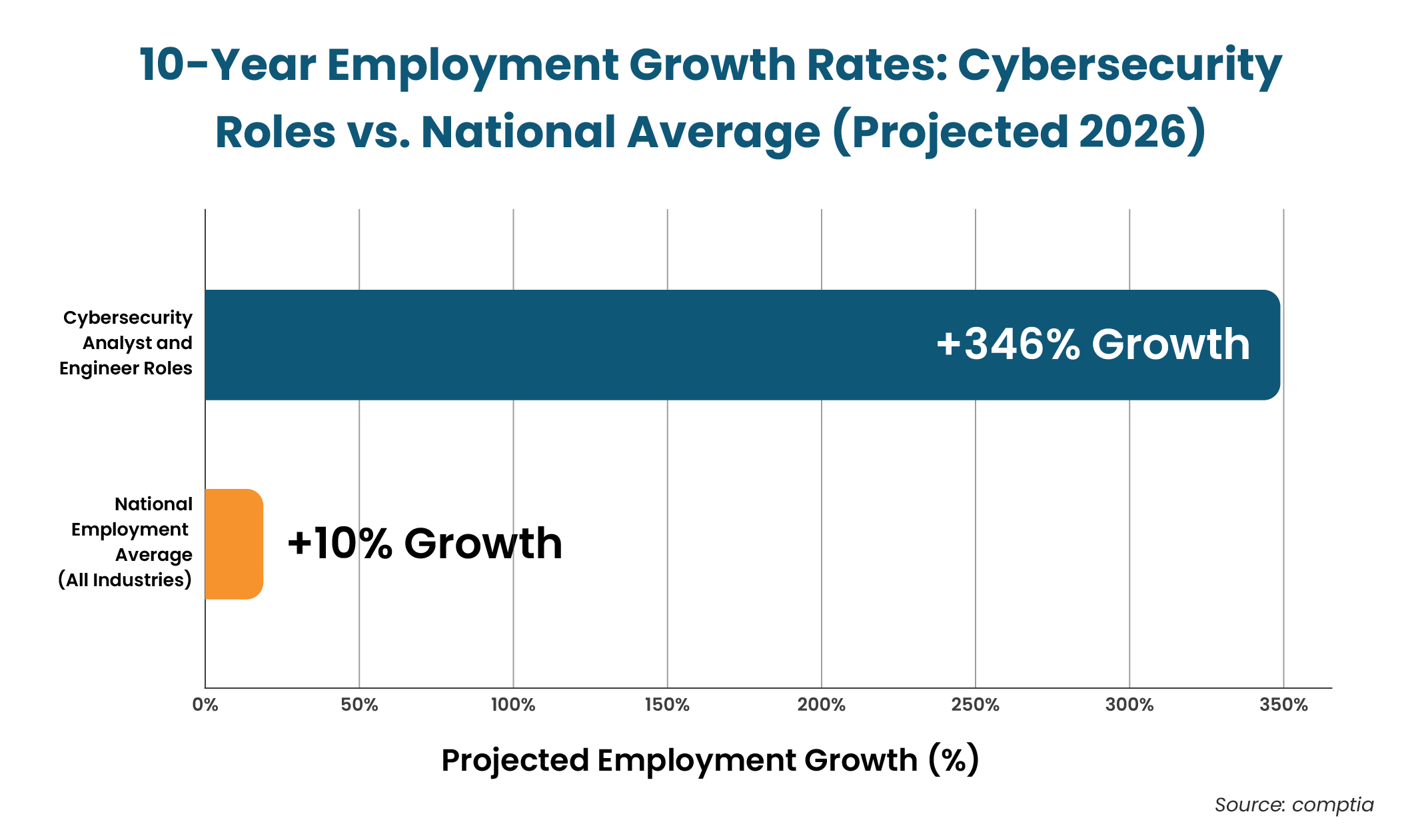
Security work hits NOC desks daily. Why? Simple math: most organizations lack enough dedicated SOC analysts to catch every single alert up front. Because escalating every flag wastes hours, much of that initial filtering now happens right on the front line.
Alert Fatigue and Alert Noise
Honestly, what burns a NOC engineer out on a shift rarely has to do with how complex an incident is. It’s the sheer, relentless volume of alerts:
- Alert racket. Monitoring tools, ticketing systems, and now AI agents each generate their own notifications, and once nobody’s pruning the rules, engineers start skimming past everything, the important alert included.
- Alert volume without much context behind it. A rise in raw alert count doesn’t necessarily mean a rise in real incidents; more often it just means the thresholds need retuning rather than the network actually getting worse.
- Generalist gaps. An engineer triaging across dozens of client environments can’t be a deep specialist in all of them, and that’s precisely where a complex issue gets stuck, waiting for someone with the right expertise to notice it.
The cost of getting this wrong keeps rising. PagerDuty’s 2026 operations report found 8% of organizations lose more than a million dollars an hour during a major incident, and over two-thirds lose above $300,000 an hour. At that point it isn’t an engineering inconvenience, it’s a line item.
How Automation and AI Are Changing NOC Work
AIOps and agentic tools have moved past the theoretical stage and are doing real work inside NOC shifts:
1. Automated alert correlation. Instead of forcing an engineer to manually hunt down and link five separate pings, modern systems group related noise automatically and drop a single, organized ticket straight into the queue.
2. Predictive and anomaly detection. AI models catch a device trending toward failure before it actually goes down, shifting a slice of the job from reactive toward preventive.
3. Auto-remediation for known issues, routine fixes like a service restart or a disk cleanup get triggered automatically now, freeing the engineer up for anything that actually requires judgment.
4. AI-assisted documentation. Some platforms draft a root-cause summary on their own at this point, cutting into the recordkeeping work that used to take up a real chunk of a shift.
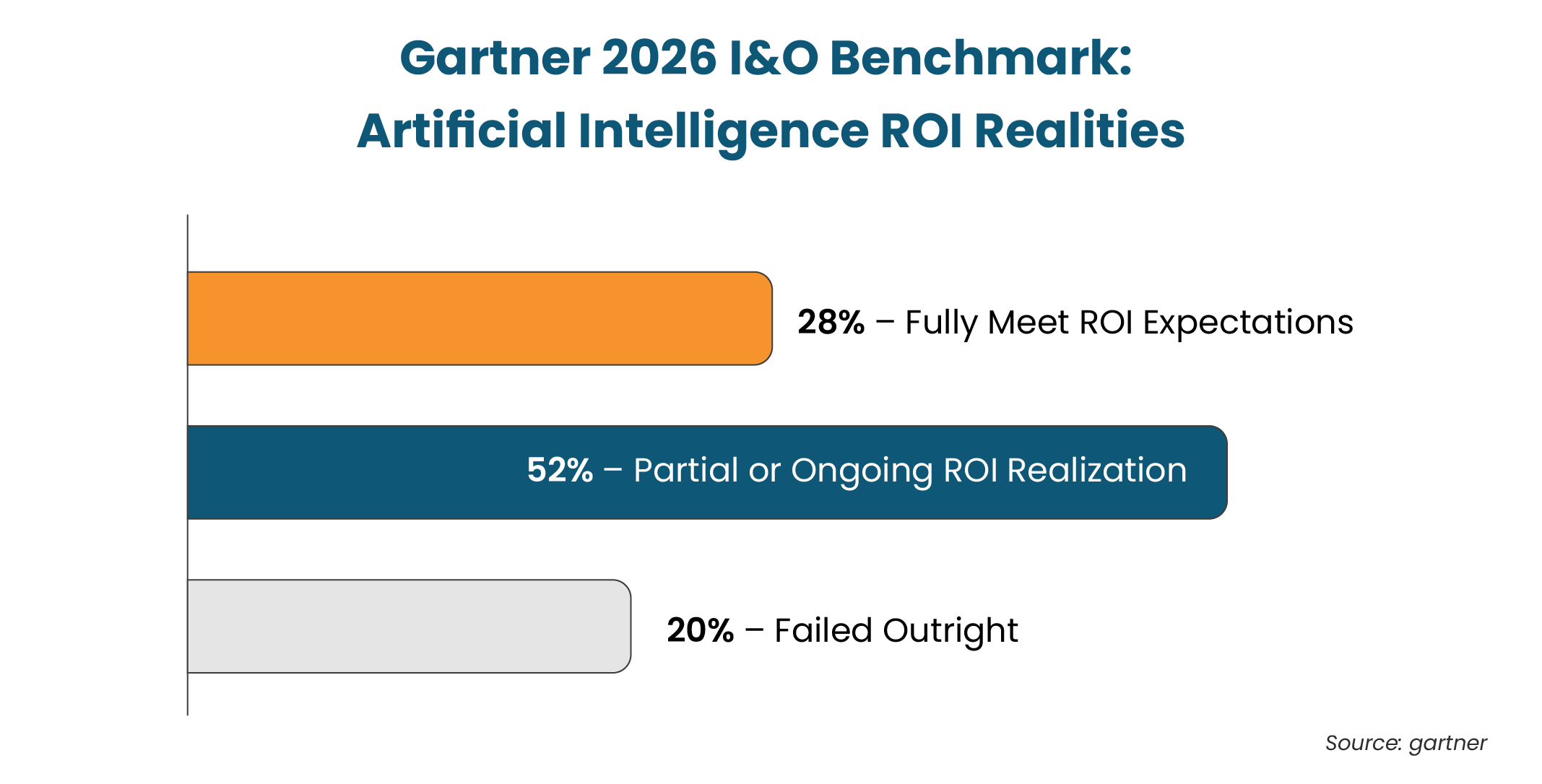
Gartner puts the number at roughly three in four: that’s how many infrastructure and operations leaders still haven’t gotten their AI deployments to a positive ROI. Someone still needs to be watching those systems, not trusting them to run alone.
What that lines up with on shift is fairly straightforward: these tools earn their keep with a skilled engineer still driving, not running unsupervised. That’s closer to how NOC automation works in practice than whatever the vendor pitch says.
How MSP NOC Engineers Work Day to Day
An MSP NOC engineer’s job diverges from an in-house NOC role in one obvious way, client count. Instead of watching a single company’s infrastructure, an MSP engineer is often responsible for dozens of environments at once, each with its own SLA, its own escalation path, and its own tooling quirks.
That difference shapes everything downstream. Ticket queues get split by client and priority so a P1 for one account doesn’t queue behind a routine request for another, and SLA management turns into a constant juggling act: a tight response window for one client, a much looser one for another, both needing to hold on the same shift.
MSPs dealing with that load, whether by outsourcing the whole function or supplementing an in-house team, often land on an outsourced NOC service model because it keeps tier coverage consistent across every client rather than stretching a small internal team past what it can handle.
Ready to scale your tier coverage without the overhead?
Get straight answers on multi-client support and seamless escalation from Infrassist before you sign the dotted line.
Becoming a NOC Engineer: Education, Certifications, and Career Path
A bachelor’s degree in computer science, or something close to it, is still the baseline expectation for most NOC roles on paper. In practice, plenty of engineers doing the job today got there through certifications and hands-on experience instead. What hiring managers weigh most is demonstrated troubleshooting ability and comfort with whatever specific tools the MSP runs.
CompTIA Network+ and Security+ cover the baseline most employers expect by default. ITIL helps anyone aiming at an L2/L3 or team-lead track since it standardizes how incident and escalation work gets documented. Vendor credentials, Microsoft’s Azure certifications or Cisco’s CCNA, matter more the closer an MSP’s stack leans toward that particular vendor.
Progression through the tiers tends to follow a fairly predictable path. L1 to L2 usually takes 12 to 24 months of steady troubleshooting reps, while L2 to L3 depends more on exposure to genuinely complex, cross-system incidents than on time served.
| Category | Examples | What It’s Used For |
| Monitoring / RMM | RMM platforms, cloud-native dashboards | Real-time device and network health visibility |
| ITSM / Ticketing | ITSM and helpdesk ticketing systems | Ticket routing, SLA tracking, documentation |
| Automation / Scripting | PowerShell, Python, automation platforms | Auto-remediation and eliminating repetitive tasks |
| Security Monitoring | SIEM platforms, endpoint detection tools | Threat detection and anomaly flagging |
When a team’s existing setup can’t keep pace with that kind of load, handing tiered coverage off entirely is often the more practical option. NOC services for MSPs exists for exactly this kind of multi-client staffing gap.