The ultimate goal of every MSP is growth, but it rarely arrives without an impact.
More clients mean more endpoints, servers, networks, and alerts, all of which demand constant attention. Before long, the operational load becomes difficult to manage without a dedicated Network Operations Center (NOC).
At this juncture, MSP leaders might start to wonder about its related details, like how much does it cost to run a NOC every month? What engineers, tools, and infrastructure are required to build one internally? And at what point does outsourcing become the smarter move?
Understanding the fully managed NOC services cost per month can help MSPs make clearer decisions about scaling operations without overwhelming their teams. Let’s learn more about this in this post.
What a Fully Managed NOC Actually Does
A NOC refers to a team of experienced technicians that closely watch and regulate the health of dozens, sometimes hundreds, of client systems at once. When businesses start looking into the fully managed NOC services cost per month, it’s usually because they’ve reached that moment where the internal team can’t keep up with the volume of monitoring and maintenance anymore.
24/7 Infrastructure Monitoring
Most MSP environments run around the clock, so the monitoring team has to do the same. A NOC keeps an eye on servers, network devices, endpoints, and cloud infrastructure 24/7.
When alerts appear, technicians review them, check whether the alert actually signals a problem, and then dig deeper if something looks off. Sometimes it’s a quick fix, but at other times, it prevents a bigger outage that would have shown up eventually.
Proactive System Maintenance
The majority of NOC work happens before systems start shutting down. Teams regularly check patch status, confirm backups are completing, and track disk space or performance trends.
Typical maintenance work includes:
- Patch updates
- Backup monitoring
- Disk and system performance checks
- Scheduled maintenance tasks
Incident Management and Troubleshooting
When something does go wrong, the NOC steps in immediately. Technicians investigate alerts, work through common fixes, and escalate issues when deeper support is needed.
Why MSPs Need NOC Services Today
Most MSPs don’t start out thinking they need a dedicated NOC team. In the early days, the internal team handles alerts, fixes issues, and keeps things running. But growth changes the equation. Add more clients, and suddenly there are hundreds of endpoints, multiple networks, and systems running across different environments. This is also when the question of fully managed NOC services cost per month starts to be taken seriously because the workload simply outgrows what a small operations team can realistically manage.
Increasing Monitoring Demands
Modern IT environments aren’t built in one place anymore. An MSP might be responsible for on-premise infrastructure, cloud platforms, remote employee devices, and a stack of SaaS applications.
Each layer adds its own alerts, updates, and potential issues. Monitoring everything consistently becomes harder as environments expand.
Client Expectations for Proactive Support
Clients don’t just want problems fixed. They expect issues to be detected early, outages prevented, and systems kept stable without constant disruption.
Technicians Need Time for Strategic Work
Without a NOC in place, senior technicians often spend their day chasing routine alerts instead of focusing on architecture, security planning, or client strategy.
Major Cost Components of an In-House NOC
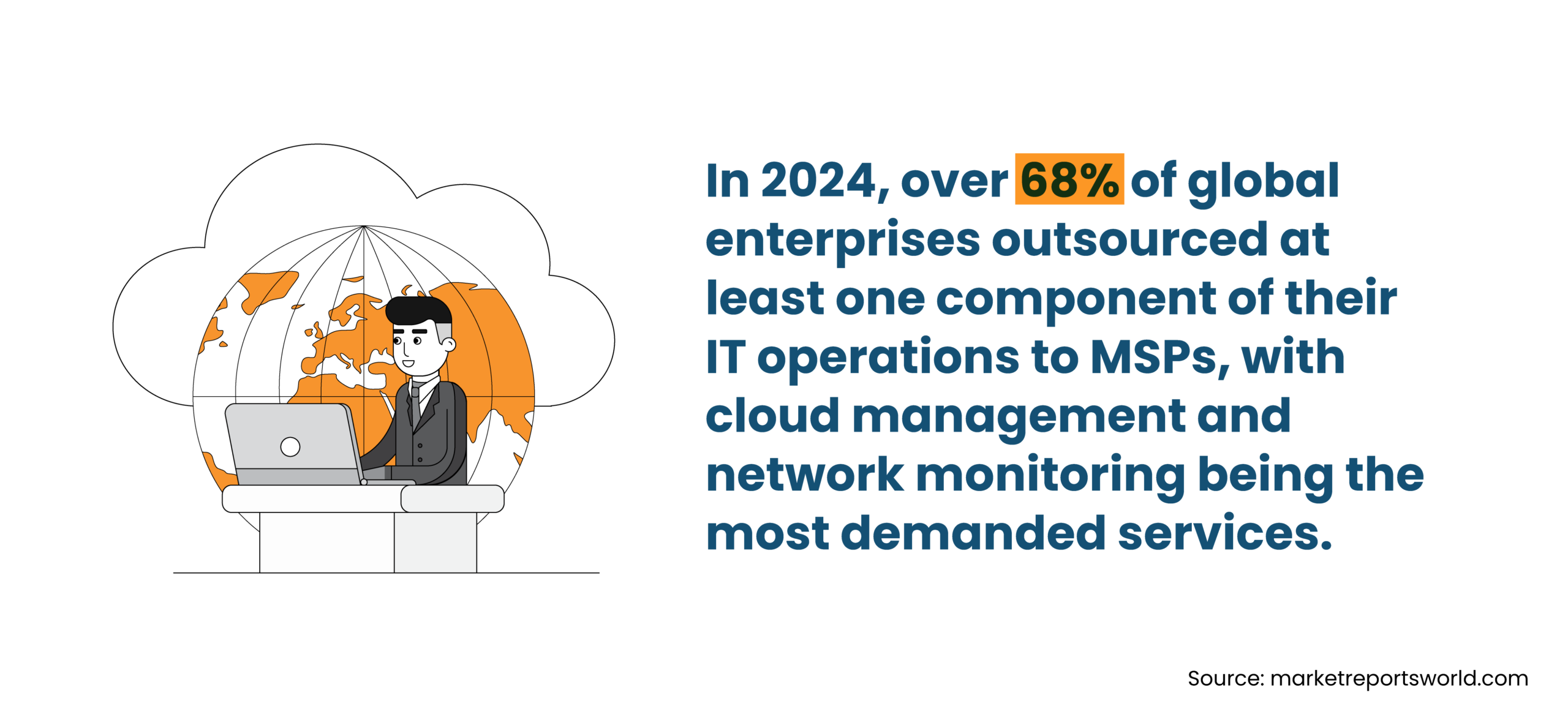
Building a NOC internally sounds straightforward at first. In reality, the costs spread across several areas, such as staffing, tools, infrastructure, and training, all adding up month after month. When MSP owners start calculating the fully managed NOC services cost per month, it’s usually because they want to compare it with the real expense of running everything themselves.
Staffing Costs
People are the largest expense in any NOC. A basic setup usually includes multiple roles working across shifts:
- L1 technicians who watch alerts and handle first-line monitoring
- L2 engineers who troubleshoot systems and infrastructure
- L3 engineers who step in when complex issues appear
Apart from monthly salaries, MSPs need to budget for benefits, recruitment, onboarding time, and ongoing training. Providing true 24/7 coverage typically means hiring several technicians for each role.
Tools and Monitoring Software
NOC teams rely on a stack of platforms to manage client environments. Common examples include:
- RMM tools
- PSA systems
- Patch management platforms
- Monitoring and alerting software
Most charge per device or endpoint. As MSP clients grow, licensing costs climb with them.
Infrastructure and Operational Setup
A functioning NOC also needs the right operational environment. Secure workstations, redundant internet connections, monitoring dashboards, and controlled credential access all become part of the setup.
Training and Skill Development
Technicians constantly update their skills to handle evolving operating systems, cloud services, and security threats. Training becomes a regular investment, not a one-time cost.
Estimated Monthly Cost of Building a NOC
At first glance, building a NOC in-house looks manageable. But over time, teams begin comparing their internal spend with the fully managed NOC services cost per month and asking if the numbers still make sense.
Small NOC (Basic Monitoring)
A typical starting point is a lean setup comprising one or two technicians with basic monitoring and limited coverage. But the catch here is: the tool stack.
Even a small NOC needs:
- RMM platform
- PSA system
- Network and infrastructure monitoring tools
- Remote access software
- Documentation systems
Most of these tools charge per device or endpoint. Industry estimates place monitoring software alone at $7 to $25 per device per month.
So, if an MSP manages 500 devices, that’s $3,500 to $12,500 monthly just on monitoring tools. Add PSA, remote access, and licensing layers, and the “small” setup doesn’t stay small for long. This is where many MSPs run into the tooling cost curve early.
Mid-Size NOC with 24/7 Coverage
Things shift once 24/7 monitoring becomes necessary. You can’t cover nights and weekends with a small team. A functioning round-the-clock NOC typically needs 10 to 12 engineers to maintain consistent coverage.
According to findings, the average engineer salary is around $80,000, which rises to roughly $112,000 per person annually after benefits, taxes, and overhead.
This puts total staffing costs between $1.12 million and $1.34 million per year, or roughly $93,000 to $112,000 per month, before tools and infrastructure are even considered.
On top of that, operations need structure. Shift handovers, escalation paths, SOPs, and SLAs all need to be defined and followed. Without that, 24/7 coverage turns into inconsistent service.
Large or Mature NOC Operations
A mature NOC adds more layers. L2 and L3 engineers, security specialists, deeper automation, and tighter processes. Needless to say, the costs rise accordingly.
There’s also more at stake. The ITIC 2024 Cost of Downtime Survey found that over 90% of mid-to-large businesses report downtime costs exceeding $300,000 per hour.
At this stage, the question is no longer just about cost, but about whether it makes sense to carry a $1M+ annual NOC operation internally or move to a model where that responsibility is handled externally at a predictable fully managed NOC services cost per month.
Hidden Costs Many MSPs Don’t Expect
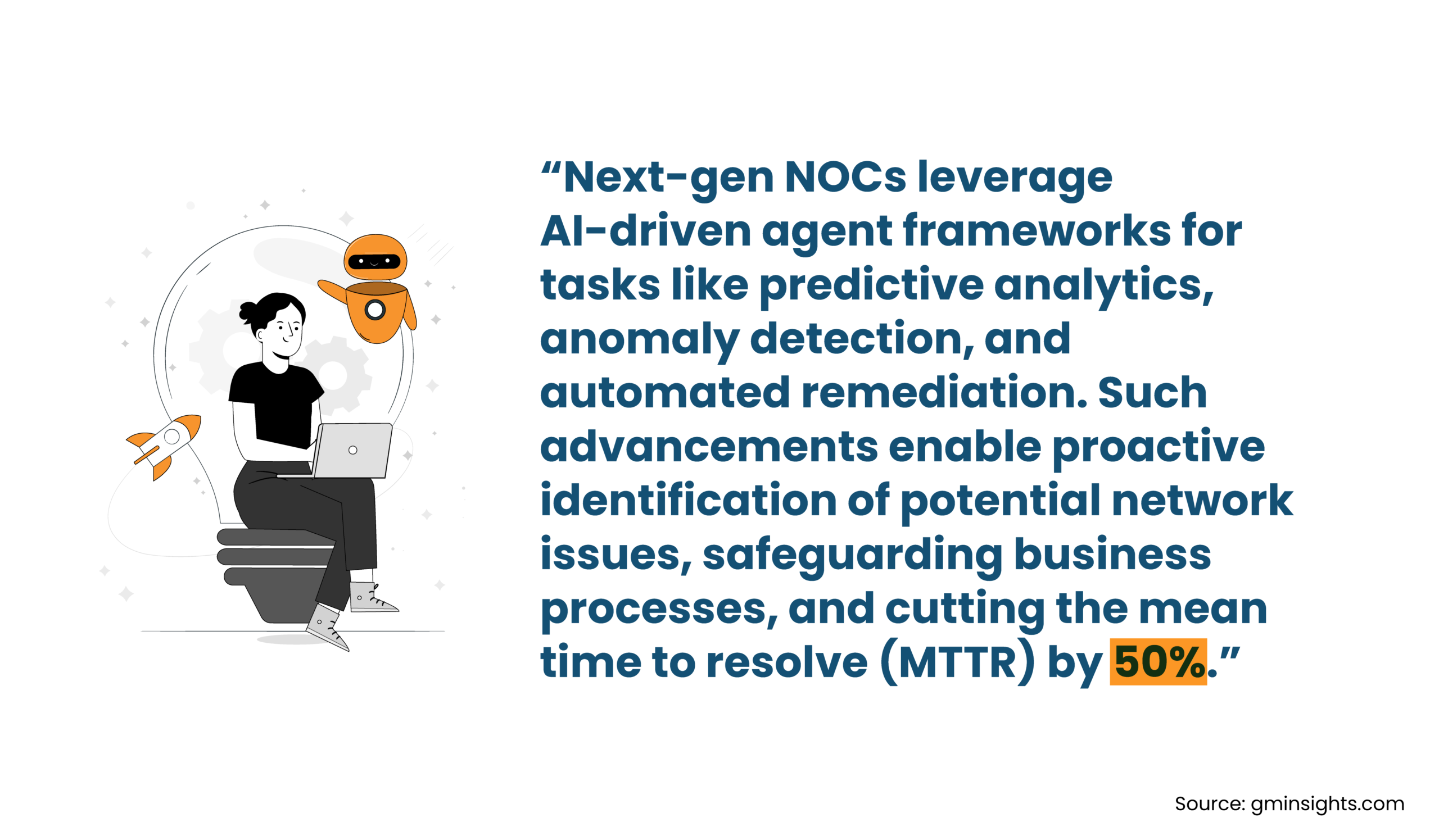
The initial NOC budget may exclude costs for challenges that weren’t obvious during planning. These may include costs related to:
Hiring and Retention Challenges
Experienced infrastructure technicians are rare to come by. Further, recruitment cycles can drag on for months, and compensation expectations tend to be high. Once hired, engineers still need time to learn internal processes, client environments, and monitoring workflows before they become fully productive.
Managing 24/7 Shift Coverage
A team member must be available during nights, weekends, and holidays to enable continuous monitoring. That means coordinating shift rotations, managing handoffs between teams, and maintaining consistent response standards regardless of the hour.
Scaling as the MSP Grows
Each new client environment introduces additional devices, alerts, and systems to track. As monitoring loads increase, teams often need more technicians, expanded tool licensing, and stronger operational oversight to keep service levels consistent.
How Outsourced NOC Services Change the Cost Model
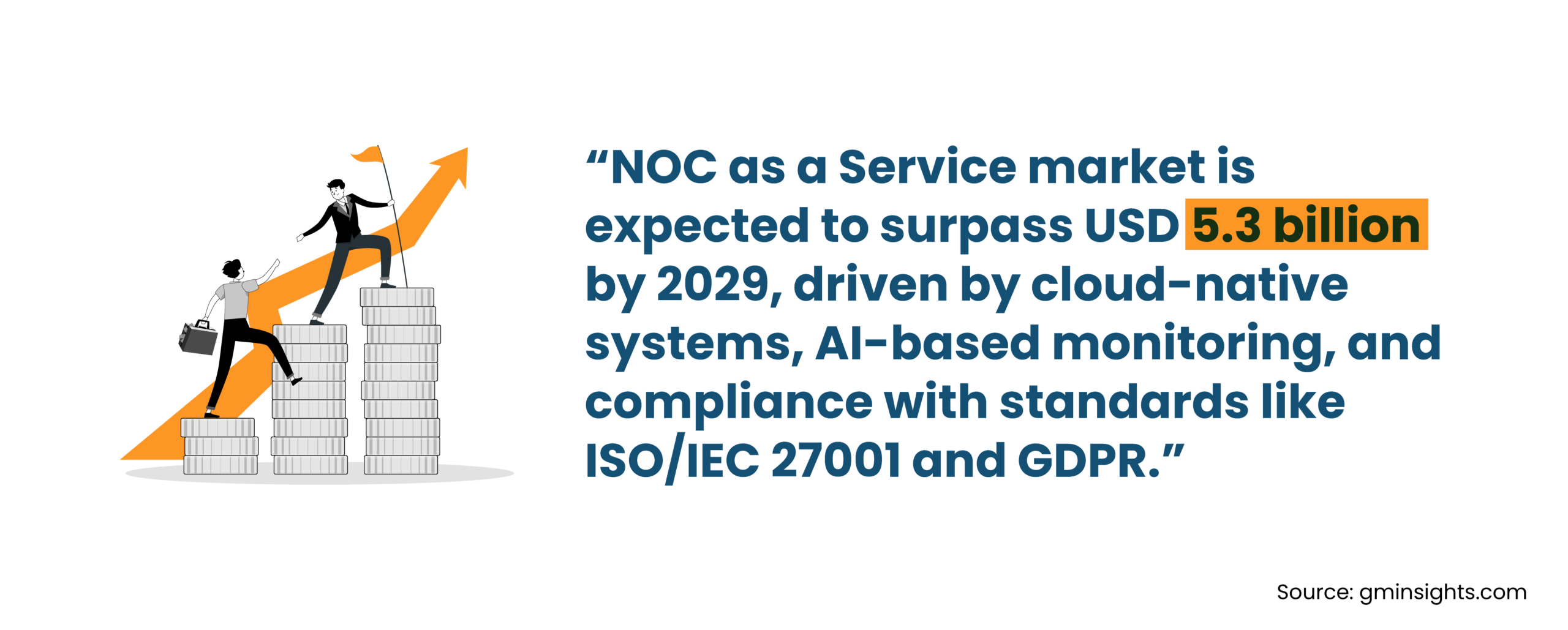
Running a NOC inside the company sounds reasonable at first. But it isn’t uncommon for businesses to reconsider this once they look at the fully managed NOC services cost per month and their practicality. Here’s how outsourcing can transform the cost model.
Predictable Monthly Pricing
Most outsourced NOC teams price their services around the number of devices being monitored: servers, endpoints, firewalls, and so on. Accordingly, they add more devices, and the bill changes.
So, if a new client comes in with fifty endpoints, the MSP can estimate the cost almost immediately without hiring and coverage hassles.
Immediate Access to Experienced Technicians
With an outsourced NOC, the recruitment and onboarding parts are already handled. The technicians are already working inside monitoring systems every day. They read alerts, troubleshoot issues, and move on to the next one.
Built-In 24/7 Operations
Many internal teams struggle when it comes to providing night coverage. But outsourced NOC teams are already working those hours. When alerts appear overnight, they get reviewed right away instead of waiting until morning.
When MSPs Should Consider Outsourcing Their NOC?
The fully managed NOC services cost per month starts to feel more practical when MSPs and businesses consider the following factors before making their decision about outsourcing.
Rapid Business Growth
Growth is great until the monitoring queue starts filling up faster than the team can clear it. A few new client environments might add hundreds of endpoints overnight. Alerts pile up, and technicians spend more time reacting than actually improving systems.
Limited Internal Resources
Some MSPs simply don’t have the headcount to build a full NOC structure. A small team may already be handling client tickets, infrastructure projects, and security. Adding continuous monitoring on top of that can leave them gasping for air.
Need for Round-the-Clock Monitoring
IT systems don’t follow business hours. Servers can fail at night, and backups can go awry over the weekend. Internal NOC plans often fail when it comes to having an expert available to watch everything around the clock.
Simplify Your NOC Operations
Let Infrassist deliver reliable 24/7 monitoring and support with fully managed NOC services built for MSPs.
Conclusion
Running a NOC in-house can work, but the costs and operational demands can spiral. Staffing, monitoring tools, infrastructure, and round-the-clock coverage all bring in more complexity. That’s why many MSPs eventually compare these internal efforts with the fully managed NOC services cost per month offered by specialized providers.
Outsourcing is a practical option for teams looking to scale without stretching internal resources. Infrassist’s NOC services give MSPs access to experienced technicians, continuous monitoring, and a support structure built specifically for managed service environments.