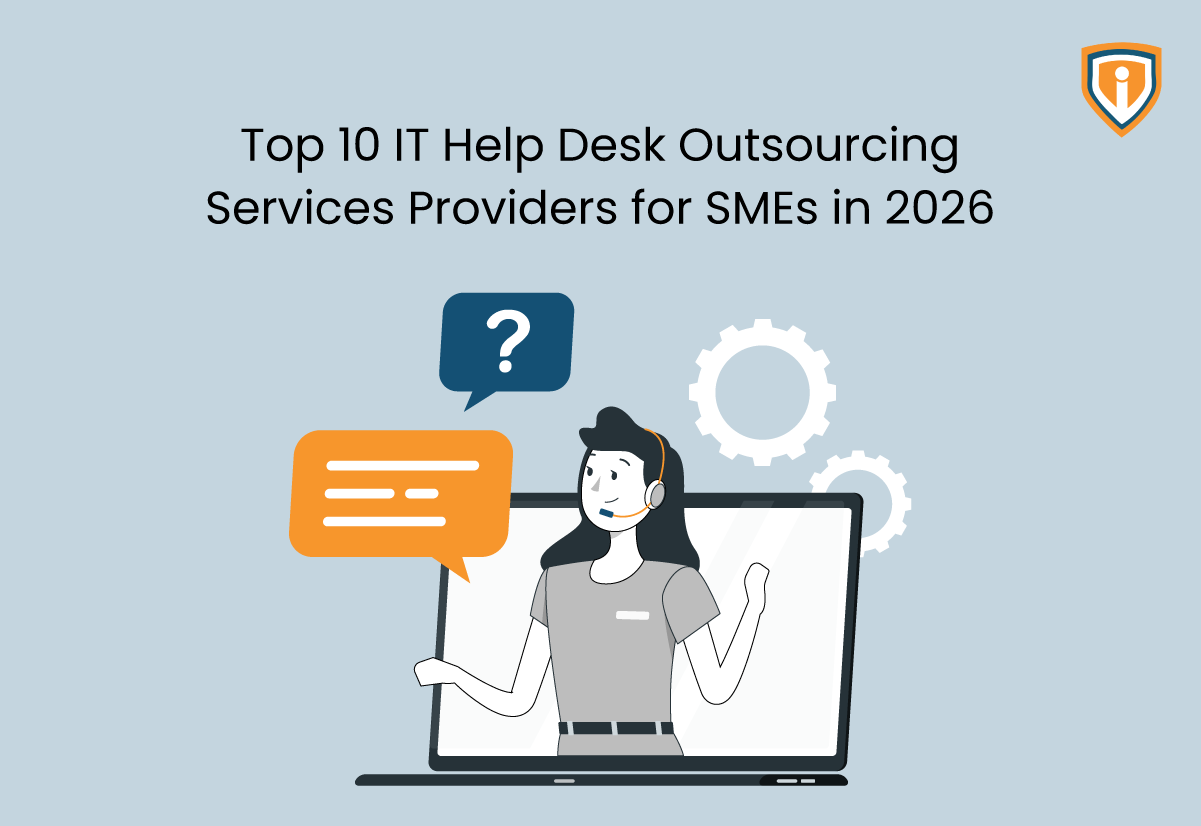
IT help desk outsourcing involves delegating a part of or all IT support processes to an external team. Rather than hiring more employees within the organization, businesses can collaborate with experienced third-party professionals who handle tasks like troubleshooting, ticketing, customer support, and more. For MSPs, outsourcing to the right help desk provider ensures round-the-clock coverage of IT functions.
Support queues that deal with after-hours tickets, escalation fatigue, SLA bleed, and hiring gaps are breaking faster than most internal teams can stabilize them.
That’s why smart SMEs and MSPs are leaning harder into IT support outsourcing services and specialized help desk providers.
But the reality is, most technical support outsourcing companies sell the same “24/7 support” deck with wildly different operational maturity behind it. Some can actually manage escalation workflows, RMM tooling, white-label communication, and L1-L3 coordination. Others become another layer of ticket noise.
In this post, we’ll evaluate a few proven outsourced tech support help desk companies on their service quality, MSP alignment, scalability, technical depth, and actual white-label execution.
We’ll also look at what separates a reliable IT support services provider from a generic help desk service provider. This will include their ability to outsource remote IT support services and handle after-hours outsourced helpdesk requirements through a dedicated technical support outsourcing service.
Key Takeaways
- With IT help desk outsourcing, you will have access to reliable service delivery, quick response, and 24/7 coverage without the high costs of hiring an internal team.
- Before you make a choice on your help desk outsourcing provider, go beyond price considerations and think about the SLA, response time, technical expertise, scalability, communications, and client management ability.
- White label IT help desk outsourcing is useful for MSPs as it allows adding 24/7 capacity, managing growing client workload and hiring fewer employees.
- It is essential to select a partner whose skills complement your service delivery process and not just technical abilities.
- It is advisable to outsource your helpdesk services when you have increasing needs that exceed the staffing capabilities of your organization. It provides the ability to increase your capacity without adding more staffing capabilities.
- Infrassist offers Tier 1 to Tier 3 services along with NOC, Microsoft 365, Azure, and white-label IT help desk services for managed service providers.
Quick Comparison of Top Help Desk Outsourcing Companies
The following providers are frequently evaluated by MSPs and SMEs looking for reliable IT support services providers, scalable support operations, and dependable technical support outsourcing.
| Provider | Best For | White-Label Support | 24/7 Coverage | NOC Services | MSP-Focused | Ideal Business Size |
| Infrassist | MSPs needing scalable white-label help desk and NOC support | Yes | Yes | Yes | Strongly MSP-focused | Growing MSPs and SMEs |
| Nerds Support | SMBs needing remote IT assistance and user support | Limited | Yes | No | Moderate | Small businesses |
| BoomTech IT | Businesses looking for strategic managed IT and support services | No | Limited | No | Partial | Small to mid-sized businesses |
| Uptime | MSPs requiring white-label after-hours support and NOC coverage | Yes | Yes | Yes | Strongly MSP-focused | MSPs of all sizes |
| CG Technologies | SMBs wanting managed IT and help desk support | No | Yes | Limited | Low | Small and regional businesses |
| Impact Networking | Businesses seeking managed IT with consulting and cybersecurity support | No | Yes | Limited | Moderate | Mid-sized businesses |
| Dataprise | Organizations needing enterprise-grade managed IT operations | Limited | Yes | Yes | Moderate | Mid-market and enterprise |
| Outsource2India (O2I) | Companies seeking offshore technical support and back-office scalability | Limited | Yes | No | Low | SMBs and enterprises |
| Bobcares | Businesses requiring continuous IT monitoring and support coverage | No | Yes | Limited | Partial | Small to mid-sized businesses |
| Kaytuso (Netrix Global) | Organizations needing integrated IT operations and cloud support | Limited | Yes | Yes | Moderate | Mid-sized and enterprise businesses |
Not all outsourced IT support services are designed around MSP workflows. Some operate like generic call centers with technical wrappers. Others function as true delivery extensions. Big difference when SLA accountability lands on your brand, not theirs. The right help desk service providers should fit into your existing workflows rather than force your team to adapt around theirs.
What Makes a Good Outsourced IT Support Company?
A capable technical support outsourcing service is measured by how efficiently it absorbs workload without destabilizing your internal team, client SLAs, or service workflows. Here’s more in this regard.
Strong Process Documentation
Good support operations run on documentation discipline.
A reliable help desk provider should already have:
- Clearly documented SOPs for repetitive support actions
- Defined escalation paths across L1, L2, and infrastructure teams
- Consistent handoff procedures between shifts and departments
- Ticket audit standards tied to SLA reporting
- Change management protocols that reduce repeat incidents
The reality is, undocumented environments create ticket recursion, which can go on to become an expensive affair.
Real 24/7 Operational Coverage
A lot of IT help desk outsourcing companies advertise 24/7 support when they really mean overnight call answering and basic triage. That’s not the same thing.
Real coverage means:
- Active infrastructure monitoring
- Live remediation capability
- Escalation-ready technical staff
- Continuous ticket ownership
- NOC coordination tied directly into support operations
If overnight tickets pile up waiting for morning-shift technicians, you do not have 24/7 support. It’s just delayed acknowledgment with branding attached. A capable after-hours outsourced helpdesk should be able to own, troubleshoot, and escalate tickets instead of simply logging them for the next shift.
White-Label Maturity
Mature white-label support providers integrate directly into existing delivery ecosystems without creating operational seams clients can notice.
That typically includes:
- Branded ticket communication
- PSA and RMM alignment
- Internal workflow mapping
- Escalation synchronization
- Documentation standards that match the MSP’s delivery model
At the end of the day, clients should experience continuity rather than a visible handoff to a third-party queue halfway through a support cycle. This is where experienced outsourced tech support help desk companies can make a measurable difference for MSPs managing support under their own brand.
Flexible Scaling Models
Static staffing models rarely survive MSP growth cycles. Ticket volume can change, so can the client mix and infrastructure complexity. Strong outsourced service desk providers build around flexible delivery structures instead of fixed technician allocation.
This may include:
- Dedicated support pods
- Blended L1/L2/L3 resource structures
- Shared or partially dedicated staffing
- Elastic resource allocation during surge periods
- Direct alignment between support teams and client environments
This pod-based approach works particularly well for MSPs trying to scale without rebuilding internal support operations every quarter. Resource continuity stays intact while operational overhead stays controlled.
Vendor and Tool Stack Compatibility
Strong IT outsourcing service providers should support widely used MSP ecosystems and security stacks without requiring custom adaptation layers.
That includes platforms and vendors such as:
- ConnectWise
- Datto
- Kaseya
- N-able
- Fortinet
- Sophos
- VMware
- Veeam
The better outsourced IT support services teams already understand how these environments behave in production, i.e., monitoring logic, backup escalation behavior, endpoint management quirks, and firewall policy handling. This operational familiarity reduces onboarding hassles and shortens stabilization time considerably.
Top Outsourced Help Desk Providers in 2026
1. Infrassist
Headquarters: Ahmedabad, India
Founded: 2015
Overview:
Infrassist operates as an MSP-focused, white-label-first operational IT helpdesk partner rather than a generic IT support services provider. The company delivers L1-L3 IT help desk outsourcing through business-hours, after-hours, overnight, and weekend coverage models designed specifically for MSP environments. It is a strong option for MSPs looking to outsource remote IT support services without changing the client-facing experience.
Core Services:
- Dedicated Helpdesk
- 24/7 NOC Services
- POD Team Support
- RMM/ M365 / FirewallAdministration
- Azure and Microsoft Migration Support
- Cloud Consulting & Professional Services
Unique Selling Points:
- What separates Infrassist from many outsourced help desk providers is operational flexibility.
- MSPs and/or end businesses can choose dedicated technicians or POD-based blended L1/L2/L3 support structures depending on ticket volume, client complexity, and SLA demands.
- The workflows are heavily process-driven, with internal escalation handling, white-label messaging, and compatibility across common MSP ITSM stacks like ConnectWise, Datto, Kaseya, N-able, Fortinet, Sophos, VMware, Veeam, and more.
Ideal For: Growing MSPs, lean IT teams, and providers struggling with overnight coverage or SLA pressure.
Operational Strengths
| Capability | Infrassist Approach |
| White-label support | Fully MSP-aligned |
| Support model | POD-based blended support |
| Coverage | 24/7 availability |
| Technical levels | L1-L3 support |
| Tool compatibility | Works within MSP stack |
| Scalability | Flexible engagement models |
| Support scope | Helpdesk + NOC + Cloud + Admin |
IT Support Gaps Get Expensive Fast
Overnight queues, SLA pressure, and technician burnout compound quickly once ticket volume scales. Infrassist helps MSPs stabilize support operations without rebuilding internal teams from scratch.
2. Nerds Support
Headquarters: Miami, USA
Founded: 2016
Overview:
Nerds Support offers managed IT services, including remote helpdesk support, specifically tailored for small and medium businesses. Their certified team handles everything from basic troubleshooting to escalated IT issues, ensuring that SMBs have reliable, 24/7 tech support without building costly internal teams. For businesses comparing help desk service providers, its focus on remote support and managed services makes it an option worth considering for day-to-day IT assistance.
Core Services:
- Outsourced IT support services
- 24/7 Remote IT Helpdesk Support
- Cloud Hosting (for QuickBooks, Office 365 Migration Services, VoIP, etc.)
- Cybersecurity Solutions (Compliance services like HIPAA, FINRA)
- Data Backup & Disaster Recovery
- IT Consulting and Virtual CIO Services
Unique Selling Points:
- Specialized focus on regulated industries (such as finance, healthcare, legal) with compliance expertise.
- 24/7 dedicated remote help desk staffed by certified IT professionals.
- A proactive, security-first approach that includes regular audits and risk assessments.
- White-glove support experience — personalized ticket handling, not a “one-size-fits-all” model.
- Focus on business continuity and strategic IT planning, not just break-fix services.
Ideal For:
Small and medium-sized businesses (SMBs) in highly regulated industries that require always-on IT support, robust security compliance, and a personalized service approach without the cost of maintaining a large internal IT team
3. BoomTech IT
Headquarters: Boca Raton, Florida, USA
Founded: 2007
Overview:
BoomTech delivers a high-touch, consultative approach to IT support. They go beyond break-fix services by aligning their IT help desk with a company’s long-term business goals. For SMEs evaluating technical support outsourcing, this approach may suit organizations looking for more than ticket resolution and basic troubleshooting.
Core Services:
- 24/7 IT help desk support
- Strategic IT consulting and infrastructure planning
- Managed cybersecurity services
- Cloud solutions and VoIP integration
Unique Selling Points:
- Personalized client relationships with a dedicated account manager
- IT strategy sessions for better long-term planning
- Emphasis on proactive support vs. reactive fixes
Ideal For:
Local or regional businesses that value personalized service, strategic growth alignment, and a true partner relationship.
4. Uptime
Headquarters: London, UK
Overview:
Uptime Global specializes in white-label 24/7 helpdesk and NOC services for Managed Service Providers (MSPs). Their flexible, brand-aligned services ensure seamless, high-quality technical support while allowing MSPs to maintain complete client ownership. For MSPs evaluating outsourced tech support help desk companies, its focus on white-label delivery and continuous coverage makes it particularly relevant.
Core Services:
- White-label 24/7 Service Desk (IT help desk support)
- White-label NOC (Network Operations Center) Services
- Professional Services (Project delivery support like migrations, deployments)
- After-hours and overflow support for MSPs
- Monitoring and management of critical IT infrastructure
Unique Selling Points:
- 100% White-labeled — Uptime operates as a seamless extension of your MSP brand.
- Scalable services that grow with your MSP’s client base without the hassle of hiring or training.
- SLA-driven delivery with strict quality control for ticket handling and response times.
- Offers flexibility — choose full-time support or just after-hours/overflow options.
Ideal For:
Managed Service Providers (MSPs) who want to expand their technical support coverage quickly, offer true 24/7 services, and maintain high client satisfaction without investing heavily in internal operations.
5. CG Technologies
Headquarters: Toronto, Canada
Founded: 1996
Overview:
CG Technologies brings decades of IT support experience with a focus on reliability, predictable costs, and rapid response times. They tailor support models to fit SME needs without the red tape of larger MSPs. Businesses looking for a help desk provider with a more tailored service model may find its approach worth considering.
Core Services:
- MSP Help Desk offering consistent IT help desk support
- Patch management & software updates
- Remote desktop support
- Cybersecurity & cloud support
Unique Selling Points:
- “No hidden fees” pricing
- Fast onboarding for SMEs
- Proactive issue prevention
Ideal For:
SMEs that want reliable service, clear pricing and consistent uptime without surprises.
6. Impact Networking
Headquarters: Lake Forest, Illinois, USA
Founded: 1999
Overview:
Impact Networking offers a blend of managed services, digital transformation, and advanced IT support—making them perfect for SMEs looking to grow fast and smart. Organizations considering technical support outsourcing services can consider this agency when they want their support requirements to exist within a larger managed IT and technology strategy.
Core Services:
- IT help desk support with tiered escalation
- Unified communications (VoIP, video conferencing)
- Automation & digital transformation consulting
- Cybersecurity and compliance services
Unique Selling Points:
- Business-focused IT strategies
- Strong Midwest presence with national expansion
- Integrates IT with business productivity goals
Ideal For:
Growth-focused SMEs looking to blend tech support with long-term digital innovation.
7. Dataprise
Headquarters: Rockville, Maryland, USA
Founded: 1995
Overview:
Dataprise is a long-standing leader in IT managed services with a dedicated SMB division. They offer scalable support models backed by deep infrastructure and hybrid work expertise. For companies planning their technical support outsourcing, Dataprise can be considered when infrastructure depth and managed IT capabilities are part of the requirement.
Core Services:
- 24/7 US-based IT help desk support for MSPs
- Cloud services & M365 management
- Hybrid work support and remote access solutions
- IT assessments & consulting
Unique Selling Points:
- Strong documentation and KPI tracking
- SLA-driven support structure
- Extensive experience with remote/hybrid teams
Ideal For:
SMBs that want reliable, well-documented service with scalability and remote workforce alignment.
8. Outsource2India (O2I)
Headquarters: Bangalore, India
Founded: 1999
Overview:
O2I provides highly cost-effective IT support outsourcing, especially for startups and SMEs looking to extend coverage while staying lean. They offer multilingual support and flexible engagement models. O2I is among those outsourced tech support help desk companies that are considered where cost control and flexible staffing are key.
Core Services:
- Tier 1 & Tier 2 IT help desk support
- Remote desktop and infrastructure support
- Multilingual ticketing support
- Custom SLAs and escalation paths
Unique Selling Points:
- Low-cost support for 24/7 operations
- Multi-language capability (ideal for global startups)
- Large-scale, well-trained support workforce
Ideal For:
SMEs and global startups looking for budget-friendly, scalable support across time zones.
9. Bobcares
Headquarters: Phoenix (Arizona, United States) and Kochi (Kerala, India)
Founded: 1999
Overview:
Bobcares offers 24/7 outsourced IT support and help desk services. They support businesses of all sizes, helping teams handle everything from user issues to server and cloud problems without having to grow their own internal support team. As such, Bobcares offers a broad technical support outsourcing service model covering multiple areas of IT operations.
Core Services:
- 24/7 helpdesk and remote support
- Ticket management and troubleshooting
- Phone, email, and live chat support
- Server monitoring and remote administration
- Cloud and infrastructure support
Unique Selling Points:
- Support available any time, day or night, every day of the year
- Help desk can be white-labeled under your brand
- Certified and experienced engineers who handle real technical issues
- Multi-channel support so users get help how they prefer
Ideal For:
Round-the-clock outsourced IT help desk and technical support, especially for SaaS, web services, and SMB operations
10. Kaytuso (Netrix Global)
Headquarters: Chicago, Illinois, USA
Overview:
Kaytuso is a division of Netrix Global with a strong focus on IT security and compliance. They offer robust support designed for regulated industries like healthcare, legal, and finance. Businesses comparing after-hours outsourced helpdesk options in environments where security, compliance, and controlled access are critical can consider Kaytuso.
Core Services:
- 24/7 IT help desk support
- Endpoint & access management
- HIPAA, SOC 2, and other compliance support
- Cybersecurity monitoring and response
Unique Selling Points:
- Compliance-first IT support model
- Deep integration with Microsoft 365 and security platforms
- Real-time reporting and auditing support
Ideal For:
Highly regulated SMEs in healthcare, fintech, legal and other industries where data protection and compliance are non-negotiable.

Outsourced IT Support Services vs In-House Support
Most internal support teams keep hitting the same walls, like hiring slows down, increased ticket complexity, unsustainable 24/7 coverage, and so on. Because of this, senior technicians start spending too much time inside repetitive support queues instead of infrastructure or strategic work.
This is usually when companies begin evaluating outsourced IT support services more seriously. Strong IT support services providers build around standardized workflows, broader technical coverage, and scalable support structures that can absorb fluctuations more efficiently.
| Factor | In-House Team | Outsourced IT Support |
| Hiring costs | High | Predictable |
| 24/7 coverage | Difficult | Easier |
| Scalability | Slower | Faster |
| Specialized expertise | Limited by hiring | Multi-disciplinary |
| SLA management | Resource-dependent | Process-driven |
At the end of the day, the decision is less about replacing internal teams and more about reducing operational strain before service delivery starts slipping.
Common Services Offered by Outsourced Help Desk Providers
The most reliable outsourced help desk providers now function as operational extensions of internal IT teams and MSP environments.
Common services include:
L1/L2/L3 Help Desk Support
User issue resolution, ticket triage, escalation handling, workstation troubleshooting, software support, and infrastructure coordination.
Multi-Channel Support via Call, Chat, and Email
Modern help desk service providers typically support users across phone, chat, email, and ticketing systems while maintaining centralized ticket visibility and SLA tracking.
Microsoft 365 Administration
User provisioning, license management, mailbox support, Teams administration, and policy configuration.
Endpoint & User Management
Device onboarding, patching, access control, endpoint monitoring, and user lifecycle management.
Firewall Administration
Policy updates, VPN support, security rule management, and alert handling.
Cloud Support
Ongoing cloud environment monitoring, access management, workload support, and performance management.
After-Hours Support
24/7 monitoring, overnight ticket handling, escalation coordination, and weekend operational coverage.
Vendor Coordination
Liaising with ISPs, software vendors, cloud providers, and hardware partners during issue resolution.
How to Choose the Right Help Desk Services Provider for Your SME
Still not sure which help desk service provider is right for you? Here are a few key considerations:
Response Time
Look for providers that offer SLA-backed guarantees on ticket response and resolution times.
Scalability
Choose a partner who can grow with you. Whether you’re five users today or 50 next year, your support needs should scale easily.
Industry Knowledge
If you’re in a regulated space (like healthcare or finance), your provider should understand compliance requirements like HIPAA, SOC 2, or GDPR.
Communication & Cultural Fit
For smoother collaboration, prioritize vendors who can integrate with your communication tools (Slack, Teams, etc.) and align with your working style.
Pricing Model
From pay-as-you-go to monthly retainers, pick a model that fits your budget and usage expectations.
Red Flags to Watch Out for in Outsourced IT Providers
Weak outsourced IT providers usually reveal themselves operationally long before contracts end. Here’s how.
Generic Call-Center Style Support
Script-driven responses with minimal technical ownership.
Weak Escalation Processes
Tickets bouncing endlessly between tiers without accountability.
No MSP Workflow Familiarity
Poor PSA discipline, inconsistent updates, and SLA misalignment.
Limited Documentation Standards
Weak SOPs create repeat incidents and unstable support quality.
Rigid Contracts
Support models that cannot adapt to growth or workload fluctuations.
No Real Technical Depth Beyond L1
Many IT help desk outsourcing companies advertise full support coverage while outsourcing complex escalation work elsewhere.
Why MSPs Prefer Operationally Mature Outsourced Service Desk Providers
Most MSPs outsource because support operations become difficult to scale internally without creating delivery gaps. Working with an IT support services provider can give them access to additional technical capacity without expanding internal headcount at the same pace.
Common pressure points include:
- Growing SLA pressure across multiple client environments
- Staffing instability and slow hiring cycles
- Alert fatigue from constant monitoring and escalations
- Long onboarding timelines for new technicians
- Overnight and weekend support gaps
- Ticket surges that overwhelm internal teams
- Scalability concerns during rapid client growth
The reality is, many outsourced service desk providers only handle ticket overflow. They don’t stabilize operations. That’s why MSP-focused providers like Infrassist act as operational partners rather than ticket-resolution vendors. The focus extends beyond basic support into workflow continuity, escalation management, white-label delivery, and scalable 24/7 operational coverage.
Scale Support Minus the Chaos
Infrassist delivers white label technical support outsourcing services built for growing MSP operations.
Conclusion
The right IT help desk outsourcing companies do more than reduce ticket backlog. They stabilize operations, improve SLA consistency, and remove pressure from internal teams trying to scale too fast with limited resources.
The difference usually comes down to operational maturity. This is in the form of process discipline, escalation handling, white-label execution, and an actual technical depth that goes beyond the basic L1 support.
For MSPs and SMEs alike, the goal isn’t simply outsourcing support. It’s building a support operation that remains stable as client expectations, ticket volume, and infrastructure complexity continue growing.