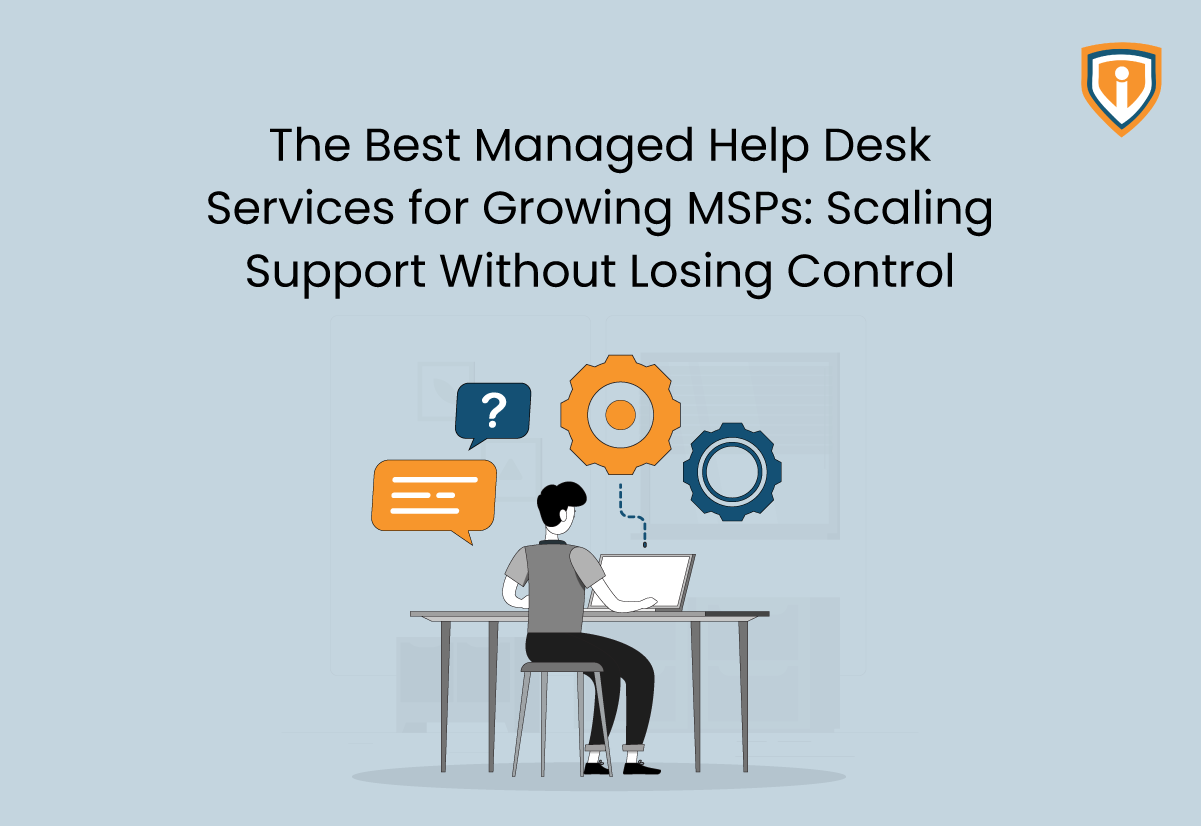
Growth exposes weak support operations faster than most MSPs expect. For instance, ticket velocity increases, SLA compliance slips, and senior technicians get pulled into repetitive support work instead of high-value projects.
Most MSPs attempt to scale internally first, but hiring, onboarding, and maintaining round-the-clock coverage becomes expensive. The reality is, support overhead grows faster than most operational models account for.
In such cases, partnering with managed help desk services for MSPs can be a practical option. The right provider reduces queue pressure, maintains ticket hygiene, and works directly inside the MSP’s PSA and RMM stack without disrupting client experience.
Strong white label help desk services operate like an extension of the internal team. Weak outsourcing setups create more operational drag than value.
In this post, we’ll explain what MSPs should evaluate before choosing a provider, and which companies currently offer the best managed help desk for growing MSPs.
What Are the Best Managed Help Desk Services for MSPs in 2026?
| Provider | Best For | Core Services | White-Label Support | 24/7 Coverage | MSP-Focused Approach |
| Infrassist Technologies | Growing MSPs needing scalable support operations | Help desk, NOC, infrastructure support, escalation handling | Yes | Yes | Strong MSP-first operational model |
| Nerds Support | SMB-focused remote IT support | End-user support, troubleshooting, cloud and security support | Limited | Yes | Moderate |
| BoomTech IT | MSPs wanting strategic IT alignment | Help desk support, proactive IT management, consulting | No | Limited | Moderate |
| Uptime | MSPs needing branded 24/7 support | Help desk, NOC services, after-hours support | Yes | Yes | Strong MSP outsourcing focus |
| C G Technologies | SMBs seeking managed IT support | Help desk, cybersecurity, cloud services, managed IT | No | Yes | Limited |
1. Infrassist Technologies
Best Known For: White label help desk for MSPs, 24/7 support coverage, and operational scalability
Most MSPs do not struggle because they lack technical capability. They struggle because ticket volume eventually outpaces internal bandwidth. This usually happens in the form of longer response times, escalations going unnoticed overnight, and senior technicians spending more time handling repetitive endpoint issues instead of infrastructure planning.
Infrassist is built around solving this exact operational bottleneck.
Instead of functioning like a disconnected third-party vendor, their team works inside the MSP’s existing ecosystem, i.e., PSA, RMM, documentation standards, escalation workflows, and support processes already in place.
Their managed help desk for MSPs covers L1-L3 and NOC responsibilities, including user support, ticket triage, monitoring, patching, escalation handling, and after-hours coverage. The structure feels less like “outsourcing” in the traditional sense and more like adding a fully operational overnight and overflow support layer without increasing internal headcount immediately.
Another thing worth noting: they understand MSP operations beyond ticket closure metrics. A lot of providers focus purely on resolving tickets fast, which sounds good until poor documentation and inconsistent escalation practices start creating repeat issues. Infrassist appears more process-driven than volume-driven, especially around root cause analysis, SOP adherence, and internal documentation hygiene.
Why MSPs Consider Infrassist
- White-label support that operates under the MSP’s own branding
- 24/7 help desk and NOC coverage without building overnight shifts internally
- Works within existing PSA and RMM workflows instead of forcing process changes
- Useful for MSPs dealing with rapid client onboarding or rising ticket queues
- Combines help desk operations with infrastructure and monitoring support
Pros
- Strong fit for MSPs needing scalable help desk services without immediate hiring expansion
- Structured operational model with clear escalation handling and documentation practices
- Good balance between ticket resolution, process consistency, and client experience
- Flexible support coverage for after-hours, overflow, and round-the-clock operations
Cons
- Probably more valuable for growth-stage MSPs than very small IT shops
- MSPs with poor internal documentation may still face onboarding friction initially
- Requires reasonably mature workflows internally to get the best operational outcome
2. Nerds Support
Best Known For: Remote help desk support for small and mid-sized businesses
Nerds Support offers a managed help desk for MSPs with a focus on handling everyday IT support without overcomplicating things. Their team covers common user issues, troubleshooting, and after-hours requests, which helps reduce pressure on in house staff. They also offer cloud and security support, making them a practical option for businesses that want dependable coverage rather than deep customization.
3. BoomTech IT
Best Known For: High-touch, consultative IT support
BoomTech combines traditional help desk functions with strategic IT planning and proactive support. Beyond ticket handling, they work closely with clients to align help desk operations with long-term IT goals. This makes them a good fit for MSPs or businesses that want help desk support tied to broader infrastructure and growth planning.
4. Uptime
Best Known For: White label 24/7 help desk and NOC services
Uptime focuses on seamless support under the MSP brand, offering 24/7 managed help desk for MSPs and network operations center services designed to act as an extension of the internal team. They also provide flexibility in support levels and after-hours coverage while keeping MSP branding front and center. Their roots in MSP-style outsourcing give them practical insight into ticket volumes and support processes.
5. C G Technologies
Best Known For: Managed IT and help desk support
Canada-based CG Technologies offers a mix of managed IT services including 24/7 help desk support, cybersecurity, and cloud services. With decades in the business, they focus on reliable support processes, predictable response times, and steady service for SMBs in the Greater Toronto Area. Their help desk offerings tie into broader managed IT support rather than being a standalone MSP help desk option.
This list is not exhaustive. For a full list of the best managed help desk service providers, do check out our suggestions here.
How Do MSPs Scale Help Desk Support Without Burning Out Internal Teams?
Most MSPs do not feel the pressure all at once. But gradually, they notice that ticket queues are staying longer than usual, engineers are multitasking constantly, and after-hours requests are becoming harder to manage. Eventually, the support desk stops feeling controlled. Here’s why.
Internal Teams Can Only Stretch So Far
Growth creates operational pressure faster than most MSPs expect. More clients mean more endpoints, more users, more tickets, and more SLA responsibility. Internal teams usually absorb the load first, but only until that stops being sustainable.
Common signs start showing up everywhere:
- Ticket backlogs becoming part of the daily routine
- Slower response times during busy periods
- Senior engineers stuck handling basic support requests
- Technicians juggling too many escalations simultaneously
- Client experience becoming inconsistent across accounts
Most MSPs try hiring more technicians at first. But the hard reality is, onboarding skilled technicians takes time, and maintaining 24/7 coverage becomes expensive fast once client expectations expand beyond standard business hours.
That’s why many growing providers eventually adopt managed help desk services for MSPs as a scaling layer instead of continuously rebuilding internal capacity from scratch.
Outsourced Support Is No Longer the Last Resort
Several modern MSPs and end-businesses use MSP help desk services because they create operational stability during growth. The better providers plug directly into existing PSA and RMM workflows, follow escalation processes properly, and reduce pressure on internal teams without disrupting the client experience.
The bottom line here: consistent support partnerships feel invisible to the client. Bad ones feel outsourced immediately.
Client Expectations Change Faster Than Most MSPs Plan For
End users expect support availability all the time now, be it nights, weekends, or holidays. Nobody wants to wait until Monday morning because an issue occurred outside business hours.
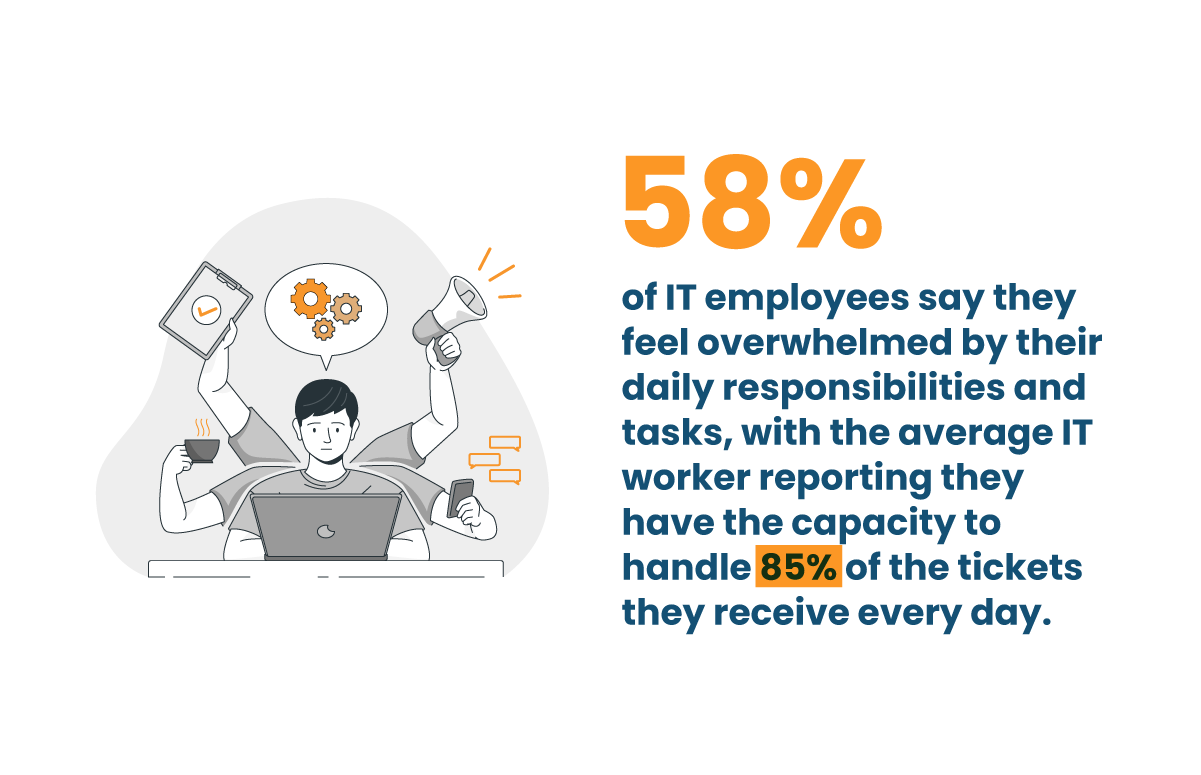
This shift is one of the biggest reasons white label help desk services have become more common. MSPs need scalable coverage without pushing internal technicians into constant burnout cycles just to keep up.
What Do the Best Managed Help Desk Services for MSPs Actually Handle?
A good IT help desk does far more than close tickets. It creates structure inside fast-moving MSP environments where support demand changes constantly.
The strongest providers usually handle three things well:
Frontline Ticket Handling
This is where you’ll find the most support volume: password resets, access issues, endpoint problems, and so on. As such, you’ll realize that even basic troubleshooting consumes internal bandwidth faster than most MSPs expect.
Good help desk teams focus on:
- Fast response and ticket triage
- Consistent ticket documentation
- Clear categorization and prioritization
- Resolving routine issues before escalation becomes necessary
- Keeping queues organized during high-volume periods
This is one area where scalable help desk services help. Internal technicians stop getting buried under repetitive support work that should never reach senior resources.
Technical Escalations
Not every ticket can stay at Level 1. Strong providers know when to escalate and how to do it properly.
Before escalation happens, good support teams usually:
- Gather logs and system details
- Document troubleshooting steps already attempted
- Clarify the actual root issue whenever possible
- Route tickets through structured escalation paths
This preparation matters more than people realize. Senior technicians lose massive amounts of time retracing incomplete troubleshooting from poorly managed desks.
Operational Process Discipline
Mature outsourced help desks for MSPs setups track recurring issues across users, systems, and environments instead of treating every ticket like an isolated event.
This creates long-term operational benefits like:
- Fewer repeat tickets
- Better internal documentation
- Cleaner escalation workflows
- Improved SLA consistency
- More predictable support operations over time
Ultimately, the goal is not just answering tickets faster, but building a support operation that scales without becoming chaotic.
How Does Tiered IT Help Desk Support Actually Work?
Tiered support exists for one reason: not every issue deserves the same technical resources. Without structure, senior engineers end up wasting time on low-level tickets while critical infrastructure problems wait in queue. Let’s see how it works.
Tier 1: Fast, High-Volume Support
Tier 1 handles the repetitive issues that flood support desks daily.
Typical examples include:
- Password resets
- Locked accounts
- Software access problems
- Printer or device issues
- Basic troubleshooting requests
The focus here is speed, consistency, and clean documentation. Strong Tier 1 support prevents simple issues from overwhelming the rest of the operation.
Tier 2: Deeper Troubleshooting
Tier 2 handles tickets requiring more technical context and system awareness.
This often includes:
- Network-related issues
- Application failures
- Permissions conflicts
- Configuration troubleshooting
- Recurring technical problems
At this stage, technicians start investigating root causes instead of just resolving symptoms temporarily.
Tier 3: Specialist-Level Issues
Tier 3 handles advanced technical work requiring specialized expertise.
These issues may involve:
- Infrastructure failures
- Security incidents
- Cloud migrations
- Complex integrations
- Advanced networking problems
By the time tickets reach this level, proper documentation should already exist. Specialists should spend time solving problems rather than rebuilding missing context from scratch.
Why Tiered Support Matters
A structured support model keeps operations efficient as ticket volume grows.
It helps MSPs:
- Resolve simple tickets faster
- Protect senior engineering bandwidth
- Improve escalation accuracy
- Maintain SLA performance more consistently
- Reduce technician fatigue during growth periods
This is one reason managed help desks for MSPs have become so common. Scaling support without structure usually creates operational bottlenecks very quickly.
How Do White Label Help Desk Services Protect the MSP’s Brand Experience?
Clients should never feel like support has been outsourced awkwardly behind the scenes. The best white label help desk services operate inconspicuously inside the MSP’s existing support experience, preserving trust while expanding operational capacity. Here’s how they do this.
Brand Consistency Matters More Than Most MSPs Admit
Good white-label support follows the MSP’s communication style, workflows, escalation processes, and client-facing standards.
This includes:
- Branded ticket responses
- Consistent communication tone
- Existing portals and workflows
- Familiar escalation processes
- Seamless client interactions
Clients notice inconsistency immediately. Different communication styles, fragmented responses, or obvious outsourcing signals damage their confidence.
The Experience Should Feel Invisible
From the client’s perspective, support should feel exactly the same regardless of who handled the ticket internally.
This operational invisibility is vital because clients appreciate responsiveness and consistency, not the staffing structure behind the scenes.
MSPs Keep Control While Scaling
The right support partner expands operational capacity without weakening client relationships.
MSPs still control:
- Escalation rules
- Service standards
- Client communication expectations
- Internal processes and workflows
This balance is why white label help desk for MSPs has become such a common growth strategy. MSPs can scale support coverage quietly without compromising the client experience that built trust in the first place.
Integration with MSP Tools Is Non-Negotiable
A managed help desk only works when it fits cleanly into how an MSP already operates. Anything else creates friction, confusion, and extra work that defeats the purpose of outsourcing.
Plugging into Existing Systems
A dependable white label help desk service plugs directly into the MSP’s existing PSA, RMM, and ticketing tools. There should be no parallel systems and no duplicate workflows. This means that tickets must come in through the same channels, updates must occur on the same platform, and SLAs should follow the same rules.
This is vital because fragmented systems slow operations down. When teams switch between tools, details can get missed, tickets may lose context, and reporting might become unreliable. Integration removes that risk by keeping all activity in one place, visible to everyone involved.
It also preserves established processes. The help desk follows the MSP’s escalation paths, documentation standards, and approval workflows. Support continues to run the way it always has, just with more capacity behind it.
Unified Reporting and Visibility
Integrated systems create shared visibility across outsourced and internal teams. Real-time dashboards show ticket volume, response times, resolution trends, and recurring issues. Everyone sees the same data instead of filtered summaries or delayed reports. This transparency improves decision-making.
MSP leaders can spot pressure points early, identify clients with growing support needs, and adjust resources before problems escalate. Internal teams know exactly what the help desk is handling and what still needs attention.
Unified reporting also enables visibility and supports structured shift handovers. Incoming teams see ticket status, notes, and next steps clearly, whether the handoff is between time zones or between outsourced and internal teams.
Without tight integration, managed help desks create blind spots. With it, they become a natural extension of the MSP’s operations, supporting growth instead of complicating it.
Round-the-Clock Support for 24/7/365 Coverage
Support issues can arise at any time. Systems might fail at odd hours, but users need to continue to work across time zones. And small problems left overnight often turn into angry calls by morning. MSPs typically feel this pressure as they grow.
Always-On Support
Offering full-time coverage sounds simple, but staffing it is not. Night shifts are hard to hire for, with burnout becoming common. Stretching the same team across longer hours is never the solution, as it can lead to slower responses during the day.
A managed help desk for MSPs changes this equation. Coverage continues after internal teams log off: tickets are acknowledged, users get proper answers, and basic issues are handled immediately. The goal is to keep things moving to prevent small issues from snowballing.
This also helps MSPs set clear expectations with clients. Support is available at all times, and this level of reliability matters more than lofty promises.
Fewer Backlogs, Less Downtime
When tickets are left unattended overnight, they stack up fast. By the next morning, teams walk into a queue that already feels unmanageable. Priority issues get mixed with routine ones, and response times suffer.
Round-the-clock support prevents this sort of pileup. Tickets are reviewed as they arrive, and simple issues are resolved while bigger ones are flagged early (with context). By the time internal teams are back online, they are not starting from zero.
This reduces unnecessary escalations and lowers downtime. Problems are addressed closer to when they occur, which limits their impact. For MSPs, that means calmer days and steadier operations. For clients, it means fewer disruptions and less waiting around for help.
Operational Maturity in Managed Helpdesk Goes Beyond Ticket Resolution
Strong MSPs do not judge support quality by ticket closure counts alone. They look at signs of long-term operational stability like fewer repeat issues, leaner escalations, and predictable support performance.
Here’s what it takes to achieve this level of consistency.
Standard Operating Procedures (SOPs) Create Consistency
Without documented processes, support quality starts depending too heavily on individual technicians. One team member may handle tickets one way, while another might follow a completely different approach. Over time, that inconsistency creates confusion, delays, and uneven client experiences.
Strong managed help desk services for MSPs rely heavily on SOPs to standardize:
- Ticket handling workflows
- Escalation procedures
- Documentation standards
- Communication practices
- Resolution steps for recurring issues
Clients should not notice operational differences simply because another technician picked up the ticket.
Knowledge Management Reduces Repeat Problems
A mature support desk treats every resolved issue as reusable operational knowledge.
Good documentation creates:
- Faster future resolutions
- Less repeated troubleshooting
- Better onboarding for new technicians
- Cleaner escalations between tiers
- Reduced dependency on tribal knowledge
This matters more than most MSPs admit publicly. Many support environments become overly dependent on a few senior technicians who “just know” certain client environments. This works until there’s a turnover, someone goes on leave, or ticket volume scales too quickly.
The better MSP help desk services providers reduce that operational risk by centralizing documentation and making support knowledge accessible across teams.
Operational Stability Directly Impacts Client Retention
Poor support operations rarely damage client relationships through one catastrophic failure. The damage usually takes place slowly through operational inconsistency.
Clients notice things like:
- Tickets reopening repeatedly
- Delayed follow-ups
- Conflicting communication from different technicians
- Escalations taking too long
- Support quality fluctuating week to week
Over time, these small breakdowns erode trust.
That’s why operational maturity matters beyond efficiency alone. Strong white label help desk services help MSPs maintain a stable client experience even during periods of rapid growth, onboarding spikes, or staffing changes internally.
Continuous Improvement Keeps Support Scalable
Mature help desk operations constantly review patterns across support activity instead of reacting ticket by ticket endlessly.
This means monitoring:
- Repeat ticket categories
- Resolution times
- Escalation frequency
- SLA performance trends
- Recurring infrastructure issues
These insights improve processes over time: SOPs evolve and training gaps become visible earlier on in the process. Further, recurring technical problems get addressed at the root level instead of resurfacing every few weeks.
At the end of the day, operational maturity is really about predictability. Support should stay stable even when growth becomes messy behind the scenes.
Strategic Co-Managed Helpdesk Models for MSPs
Not every MSP wants full outsourcing. Many teams perform best with a co-managed support model that blends internal expertise with managed help desk capacity.
Managed Help Desk Responsibilities
The managed help desk handles high volume, repeatable work that follows clear processes. This includes end user issues such as password resets, login failures, and access requests. Moreover, common application problems, device troubleshooting, routine service requests, and how-to queries are resolved quickly and consistently.
After hours and overflow ticket volumes can also be dealt with. This prevents queues from growing during peak periods and keeps response times steady even when internal teams are offline or busy.
What Internal MSP Team Owns
Internal teams concentrate on tasks that need deeper client knowledge and strategic thinking. These include work to be performed on client-specific systems, custom environments, and complex infrastructure changes. Technicians will lead architecture decisions, long-term improvement projects, and strategic IT initiatives that will shape the client’s environment.
On-site support is handled internally when physical presence or direct coordination is required. This structure protects internal expertise while keeping daily support workloads manageable.
For MSPs, co-managed models offer flexibility by providing room to scale while keeping control over critical tasks. As such, they combine the best parts of internal expertise and managed support into a single operating flow.

Security Awareness in Help Desk Support
Help desk support is often the first place where security shows up in day-to-day operations, i.e., through routine access requests, login problems, and user errors. A managed help desk is required to treat these moments seriously, without turning support into a roadblock.
Secure Access and Verification
Every request for access, reset, or permission change carries risk. A dependable help desk follows clear verification protocols before taking action. Identity checks are consistent, and permissions are reviewed, not assumed. Further, requests are validated against defined rules.
This protects both the MSP and the client. How? Users get help without unnecessary friction, but shortcuts are avoided. Support teams do not rely on gut feeling or familiarity. They follow the process every time, even under pressure.
Secure handling of credentials and access requests also reduces accidental exposure. Simple mistakes often cause the biggest problems. Strong verification habits help prevent them before they happen.
Incident Awareness
Help desk tickets also serve as a layer of security documentation. Unusual requests, repeated access failures, suspicious behavior, and unexpected system changes all show up first in tickets. When logged properly, these patterns become visible. They help MSPs spot potential issues early, before they escalate into incidents.
Teams that understand this make root cause analysis part of their process when they identify patterns. They know when a ticket is not just a support issue, but a signal. This awareness adds practical security value without slowing down daily support work.
A Practical Roadmap to Onboarding the Best Managed Help Desk Service Partner
Onboarding a managed help desk for MSPs works best when it follows a clear, realistic plan.
Step 1: Analyze Your Current Support Load
Start by understanding what your help desk actually handles today. Look at ticket volume, common request types, peak hours, and recurring issues. This data will help define what should move to the managed help desk and what should stay internal.
Step 2: Define SLAs and Escalation Paths
Next, set clear service levels and escalation rules. Define response times, resolution targets, and ownership boundaries. Make sure internal teams and clients understand how issues move through the system. Clear rules reduce friction and speed up decision-making.
Step 3: Integrate Tools and Set Up Workflows
Tool integration should happen early. Sync PSA, RMM, and ticketing platforms so everyone works from the same system. Align workflows with existing processes instead of creating new ones. This step protects visibility and consistency.
Step 4: Test, Measure, Adjust
Run an initial review cycle of sixty to ninety days. Track performance, resolution quality, and handoff efficiency. Use real data to refine workflows and priorities. Remember, onboarding is not a one-time task. It improves through adjustment.
Stop Letting Ticket Queues Control Growth
Infrassist delivers 24/7 MSP help desk support that scales operations without sacrificing service quality.
Conclusion
As an MSP grows, IT issues and ticket volumes are bound to invariably increase. Moreover, customer demands tend to soar. Sooner or later, the internal support team starts experiencing operational limitations.
This is why many MSPs nowadays utilize managed IT help desk services for MSPs. It not only helps them scale up without compromising on consistency, but also ensures that their internal teams aren’t overwhelmed.
The bottom line is, while scaling is important, it cannot be achieved at the cost of increased complexity in managing your support operation. Make your decision wisely!